ROBOHAND RPL-4 Pneumatic Parallel Gripper Obo 150
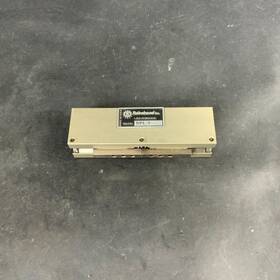
( Brand: Robohand ), ( Manufacturer Part Number: RPL-4 ), ( Type: Pneumatic ), ( Country Of Origin: United States )
Review ROBOHAND Pneumatic Parallel Gripper 150 Obo
The **RoboHand RPL-4 Pneumatic Parallel Gripper (150 OBO)** is a high-performance, industrial-grade gripping solution designed to deliver precision, reliability, and versatility in automated manufacturing, assembly, and material handling applications. Engineered with a robust **pneumatic actuation system**, this parallel gripper leverages compressed air to generate consistent, repeatable gripping forces ideal for handling lightweight to moderately heavy components with a **maximum payload capacity of 150 grams (OBO rating)**. Its **dual-finger design** ensures even pressure distribution, minimizing slippage and damage to delicate or irregularly shaped objects, while the **parallel jaw alignment** guarantees accurate positioning and consistent grip repeatability across cycles. Built with **durable, corrosion-resistant materials**, including high-grade stainless steel and reinforced polymer components, the RPL-4 is well-suited for harsh environments, including those exposed to moisture, dust, or chemical residues, ensuring long-term operational integrity. The gripper s **modular and compact footprint** allows for seamless integration into existing robotic arms, conveyor systems, or automated cells, with standard mounting interfaces (such as ISO flanges or custom adapters) facilitating easy installation. Its **adjustable grip width range** typically spanning from **0 mm to 100 mm (adjustable based on finger length)** accommodates a wide variety of part sizes, from small electronic components to medium-sized packaging or test fixtures. For enhanced safety and efficiency, the RPL-4 incorporates **fail-safe pneumatic logic**, ensuring the gripper releases its load in the event of air pressure loss, while its **low-energy consumption** and **quiet operation** contribute to a more sustainable and ergonomic workspace. Whether deployed in **pick-and-place operations, automated testing, or precision assembly tasks**, this gripper excels in applications requiring **gentle yet firm control**, such as handling fragile electronics, medical devices, or automotive components. With its **quick-release mechanism** and **minimal maintenance requirements**, the RPL-4 minimizes downtime, making it a cost-effective choice for manufacturers seeking a balance between performance and operational simplicity. Backed by RoboHand s reputation for innovation in robotic end-effectors, this gripper represents a reliable investment for businesses looking to elevate their automation capabilities with a tool that combines **precision engineering, adaptability, and industrial durability**.
### **Pros and Cons of buying a RoboHand RPL-4 Pneumatic Parallel Gripper (150 mm Opening Width)**
#### **Pros**
1. **High Precision and Repeatability**
The RPL-4 is designed for industrial applications, offering consistent and repeatable gripping performance with minimal variation. This is critical in automated assembly, packaging, and material handling where accuracy is essential.
2. **Wide Opening Range (150 mm)**
The 150 mm opening width allows the gripper to handle large and irregularly shaped objects, making it versatile for applications where standard grippers would struggle. This flexibility reduces the need for multiple gripper models.
3. **Pneumatic Operation**
Pneumatic systems are generally faster and more responsive than hydraulic or electric alternatives. The RPL-4 can achieve rapid opening and closing cycles, improving throughput in automated processes. Additionally, pneumatic actuators are less prone to wear compared to electric motors in high-cycle applications.
4. **Durability and Robustness**
Built for industrial use, the RPL-4 is likely constructed with sturdy materials (e.g., hardened steel fingers, sealed pneumatic components) to withstand heavy-duty operations, vibration, and environmental factors like dust or moisture (depending on the model variant).
5. **Compatibility with Existing Systems**
The gripper is likely designed to integrate seamlessly with standard industrial robots (e.g., ABB, KUKA, Fanuc) and pneumatic control systems. This reduces integration time and costs, especially if you already have a pneumatic network in place.
6. **Low Maintenance Requirements**
Pneumatic systems typically require less maintenance than electric or hydraulic counterparts. There are no brushes, belts, or complex fluid systems to service, reducing downtime and operational costs over time.
7. **Force Adjustability**
Many pneumatic grippers allow for force adjustment, enabling the user to fine-tune grip pressure based on the object s fragility or weight. This feature enhances safety and prevents damage to delicate materials.
8. **Cost-Effective for High-Volume Applications**
While the initial cost may be higher than some simpler grippers, the durability and speed of pneumatic systems can justify the investment in high-volume production environments where downtime is costly.
---
#### **Cons**
1. **Higher Initial Cost**
Compared to basic electric or hydraulic grippers, the RPL-4 is likely more expensive upfront. The premium is justified by its performance, but smaller operations or low-volume applications may find it overkill.
2. **Dependence on Pneumatic Infrastructure**
You ll need a reliable compressed air supply (compressor, filters, regulators) to operate the gripper. If your facility lacks this infrastructure, additional costs for installation and maintenance will arise.
3. **Noise and Vibration**
Pneumatic systems can generate noise and vibration, which may be problematic in cleanroom environments, sensitive laboratories, or facilities with strict noise regulations. Soundproofing or vibration dampening may be required.
4. **Limited Suitability for Small or Delicate Objects**
While the 150 mm opening is excellent for large items, it may not be ideal for gripping small parts or objects requiring precise, low-force manipulation. In such cases, a different gripper (e.g., vacuum, electric servo) might be more appropriate.
5. **Energy Consumption**
Pneumatic systems consume compressed air, which is generated by electricity. While the gripper itself doesn t draw power directly, the energy required to produce and maintain compressed air can add to operational costs, especially in large-scale systems.
6. **Potential for Air Leaks**
Over time, pneumatic components can develop leaks, leading to inefficiencies or failures. Regular inspections and maintenance are required to prevent downtime.
7. **Limited Customization for Specialized Tasks**
Unlike servo-driven electric grippers, which can be programmed for complex motions, the RPL-4 is primarily a parallel gripper with fixed finger movement. For applications requiring rotational gripping, suction, or adaptive compliance, additional hardware may be needed.
8. **Weight and Size Constraints**
The gripper s size and weight may limit its use on lightweight or small robots. If you re working with compact robotic arms, the additional load could affect payload capacity or dexterity.
---
### **Conclusion**
The **RoboHand RPL-4 Pneumatic Parallel Gripper (150 mm)** is a high-performance tool well-suited for industrial applications demanding speed, durability, and the ability to handle large or irregular objects. Its pneumatic operation ensures rapid cycling and low maintenance, making it ideal for automated assembly lines, packaging, or material handling where consistency is key.
However, the gripper s strengths come with trade-offs: it is more expensive than simpler alternatives, requires a pneumatic infrastructure, and may not be the best choice for delicate or small-scale tasks. If your application prioritizes **throughput, robustness, and large-object handling**, the RPL-4 is a strong investment. For **precision, energy efficiency, or small-part manipulation**, an electric servo gripper or vacuum-based solution might be more appropriate.
---
### **Recommendation**
**Buy the RPL-4 if:**- You operate in an industrial setting with high-volume, repetitive tasks.
- Your workflow involves handling large or irregularly shaped objects (up to 150 mm).
- You already have a pneumatic system in place or can justify the infrastructure costs.
- Speed and reliability are critical, and maintenance is manageable.
**Consider alternatives if:**- Your budget is tight, and you can achieve similar results with a simpler gripper.
- Your application requires ultra-precise or delicate handling (e.g., electronics assembly).
- You lack a pneumatic system and cannot install one without significant overhead.
- Your objects are consistently small or require complex gripping motions (e.g., rotational gripping).
**Final Suggestion:**If possible, **test the gripper in your specific application** before committing to purchase. Many manufacturers offer rentals or demo units, which can help validate whether the RPL-4 meets your operational needs. Additionally, consult with a robotic integration specialist to ensure compatibility with your existing equipment.
Details:
Grip Force bf: 36.0. These services include. ROBOHAND RPL-4 PNEUMATIC PARALLEL GRIPPER Cylinder Bore in: 0.5. Prices for these options may differ from standard ground shipping.
Maximum Finger length in: 5.0. Pressure Range psi: 5-100 psi. Items sold as displayed. Finger Material: Carbon Steel.
UPS Next Day AM.
part #: rpl4 prices
- $150.00-$1350.00
specifications generapneumati:
- brand: Robohand
- mpn: Rpl-4
- type: Pneumatic
- country of origin: United States
general generapneumati:
- Business Industrial > Hydraulics, Pneumatics, Pumps Plumbing > Other Hydraulics Pneumatics
- condition: Used
seller generapneumati:
- city: Waukesha, Wisconsin
- rating: 99.8%
- # reviews: 1107
payments generapneumati:
- wallet: Apple-pay
- credit card: Discover
- other
returns generapneumati:
- policy: Returns Accepted
- time: 30 Days
- paid by: Seller
- method: Money back
offer generapneumati:
- sold: 0
- availability: In Stock
- quantity: 1
- options: Ship-to-home
- best offers: True
- started: June 9, 2026
shipping generapneumati:
- transit: 2-6 Days
- class: Standard, Expedited
- cost: $5.89
- carrier: USPS, UPS
- service: USPS Ground Advantage, UPS Ground, UPS 2nd Day Air
- type: Calculated
Robohand RPL-4 Is Similar To:
- Ct-16 Robohand Angular Gripper (53.2% similar) 12DISPLACEMENT in. 13ACTUATION time close. 003REPEATABILITYMM. For sale is Robohand CT-16 angular gripper 2-JAW 180-DEG picture just represent item price: 645. 13ACCURACYMM. 002MAXIMUM finger length mm 70MAXIMUM in 070ACCURACY in. 00GRIPPERS can be mounted operated in any orientation pressure ...(May 5th, 2018)
- Dua-112m-p Destaco 10338 Robohand Angular Gripper (42.9% similar) This item is to be installed and maintained by qualified individuals...(October 6th, 2015)
- Rr-46-90-m Destaco Robohand Pneumatic Rotary Actuator New (45.3% similar) Or calling if you are within the USA. All prices are in us. All shipping liabilities revert to the carrier once product is shipped. All specifications are offered merely as a guide and are approximate only, not binding. Buyer acknowledges that he has inspected the equipment and is satisfied with its...(October 11th, 2015)
- Robohand Destaco Dua-112m 10338 Angular Gripper (47.4% similar) This item is to be installed and maintained by qualified individuals...(June 17th, 2015)
- Ppc-25-re Robohand Pneumatic 3-finger Gripper (59.6% similar) Please bid confidently...(May 19th, 2017)
- Ps-5-5 Robohand Pneumatic Slide Very (54.1% similar) Very good pre owned condition, no defects, came from jewelry manufacturing company, great item. All of the items are clean from a clean, smoke free environment. Robohand PS-5-5 pneumatic slide very good pre owned condition. DEALS4U offers a variety of quality new used items at fraction the cost you ...(September 23rd, 2017)
- Rpw-375m-2 Robohand Wide Body Parallel Gripper (56.8% similar) Robohand wide body parallel gripper row 375M 2UNABLE to test I16 1187LOC WW TTT2...(October 12th, 2016)
- Sm-200 Robohand 4-jaw Pneumatic Air Gripper (65.2% similar) Model Sm 200 this air gripper is in great condition and fully guaranteed. Robohand Sm jaw pneumatic air gripper you are purchasing a Robohand pneumatic air gripper. 90 within the continental USA. Create listings that get noticed...(November 19th, 2015)
- Rp-35p Robohand Destaco Precision Parallel Grippers (60% similar) It appears to be missing the bottom parts all proceeds are donated our local maker space. Its been on the shelf for awhile, may or not be used...(March 31st, 2019)
- Rp-5 Robohand Pneumatic Air Grippers (65.9% similar) Robohand RP-5 pneumatic air grippers w flow controls 1/8 not...(May 8th, 2017)
- Rpc-320 Robohand Pneumatic Finger Parallel Gripper Grip Force Used (66.1% similar) Using the ask a question link at end of this item or by ING on our username surplus and there. Item is sold as pictured. Prices for these options may differ from standard ground shipping. Condition: used Robohand pneumatic RPC-320, 3 finger parallel gripper, 300LBS 1334 n grip force. The cost of ...(October 31st, 2018)
