AUTOMATION COMPONENTS INC PXP100 Hydraulics Pneumatics
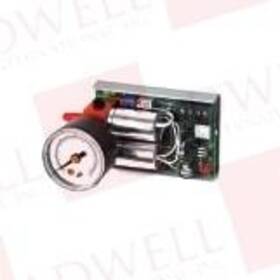
( Brand: Automation Components Inc ), ( Manufacturer Part Number: PXP100 ), ( Part Type: Hydraulic Pneumatic )
Review AUTOMATION COMPONENTS INC Used
The **Automation PXP100** is a high-performance, all-in-one programmable logic controller (PLC) designed to deliver unparalleled flexibility, reliability, and efficiency for industrial automation applications. Engineered with a compact yet robust form factor, this advanced controller combines cutting-edge processing power with a user-friendly interface, making it an ideal solution for manufacturers seeking seamless integration into their production lines. At its core, the PXP100 features a high-speed, multi-core processor capable of executing complex control algorithms, real-time data processing, and high-speed I/O operations with minimal latency. This ensures smooth coordination between machinery, sensors, and actuators, even in the most demanding environments where precision and responsiveness are critical.
One of the standout features of the PXP100 is its extensive modularity, allowing users to customize the system according to specific application requirements. The controller supports a wide range of analog and digital inputs and outputs, including high-speed counters, pulse-width modulation (PWM) outputs, and serial communication ports (such as RS-232, RS-485, and Ethernet). This versatility enables seamless interfacing with a variety of industrial devices, from simple limit switches and pressure sensors to advanced vision systems and motor drives. Additionally, the PXP100 incorporates built-in safety features, such as redundant power supplies, fault-tolerant memory, and configurable watchdog timers, ensuring continuous operation and rapid recovery in the event of system disruptions.
The PXP100 is equipped with a powerful programming environment that supports industry-standard languages like IEC 61131-3 (Ladder Logic, Structured Text, Function Block Diagram, and Sequential Function Chart), as well as Python and C-based scripting for enhanced customization. This flexibility empowers engineers and technicians to develop sophisticated control logic, implement machine learning algorithms for predictive maintenance, and integrate cloud-based monitoring for remote diagnostics and optimization. The controller also includes a high-resolution touchscreen display with a graphical user interface (GUI), enabling real-time visualization of process data, trend analysis, and intuitive operator controls. This feature significantly enhances productivity by providing instant feedback and reducing the need for external HMI (Human-Machine Interface) systems.
Built to withstand the rigors of industrial environments, the PXP100 is constructed from high-grade materials and features an IP67-rated enclosure, ensuring protection against dust, moisture, and temperature fluctuations. The controller operates efficiently within a wide temperature range, making it suitable for applications in harsh conditions such as manufacturing plants, food processing facilities, and outdoor automation systems. Furthermore, its energy-efficient design minimizes power consumption while maintaining peak performance, contributing to both operational cost savings and sustainability goals.
The PXP100 also excels in connectivity, offering multiple communication protocols, including Modbus TCP, Profibus DP, EtherNet/IP, and OPC UA, to facilitate seamless integration with enterprise resource planning (ERP) systems, manufacturing execution systems (MES), and other industrial networks. This interoperability allows for centralized monitoring, data logging, and remote control, enabling manufacturers to achieve greater operational transparency and agility. Whether deployed in a small-scale automation project or as part of a large-scale industrial automation network, the PXP100 delivers a robust, scalable, and future-proof solution that adapts to evolving technological demands. With its blend of advanced functionality, ease of use, and uncompromising reliability, the Automation PXP100 is a game-changer for industries looking to enhance efficiency, reduce downtime, and drive innovation in their automation strategies.
### Pros and Cons of buying a Automation PXP100
The **Automation PXP100** is a programmable logic controller (PLC) designed for industrial automation, particularly in applications requiring precise control, communication, and scalability. Below is a detailed breakdown of its advantages and disadvantages.
---
### **Pros of the Automation PXP100**
1. **High Performance and Speed**
The PXP100 is built on a high-speed processing architecture, capable of executing complex control algorithms efficiently. Its real-time processing ensures minimal latency, which is critical for applications like motion control, robotics, or high-speed manufacturing.
2. **Scalability and Modularity**
The system supports modular expansion, allowing users to add I/O modules, communication interfaces, or additional processing units as their automation needs grow. This flexibility reduces the need for a complete system overhaul when scaling operations.
3. **Advanced Communication Protocols**
The PXP100 supports a wide range of communication protocols, including **Ethernet/IP, PROFINET, Modbus TCP, OPC UA, and CANopen**. This interoperability enables seamless integration with other industrial devices, SCADA systems, and enterprise networks, facilitating data exchange and remote monitoring.
4. **Robust Hardware Design**
The PLC is designed for harsh industrial environments, with features like **wide operating temperature ranges, high resistance to electromagnetic interference (EMI), and rugged enclosures**. This ensures reliable operation in factories, oil and gas plants, or outdoor installations.
5. **Built-in Safety Functions**
The PXP100 includes **safety-certified modules** (e.g., SIL 3 or PL e compliant) for applications requiring fail-safe operations. This reduces the need for additional safety relays or external safety controllers, enhancing system reliability and compliance with safety standards.
6. **User-Friendly Programming Environment**
Automation s **PX Studio** or **PLC programming software** provides an intuitive interface for writing, debugging, and optimizing control logic. Features like **drag-and-drop function blocks, structured text, and ladder logic** cater to engineers with varying levels of expertise.
7. **Energy Efficiency**
The PXP100 incorporates power-saving features, such as **low-power modes and efficient cooling**, which can reduce operational costs in long-running industrial applications.
8. **Support for AI and Machine Learning (Optional)**
Some advanced versions or integrations allow for **predictive maintenance analytics** or **AI-driven process optimization**, enabling proactive troubleshooting and improved efficiency.
9. **Global Certification and Compliance**
The PLC meets international standards such as **IEC 61131-3, CE, UL, and ATEX** (for explosive environments), making it suitable for deployment in regulated industries like pharmaceuticals, food processing, or chemical manufacturing.
10. **Technical Support and Documentation**
Automation provides comprehensive **documentation, training resources, and customer support**, including access to technical forums and certified engineers for troubleshooting.
---
### **Cons of the Automation PXP100**
1. **High Initial Cost**
The PXP100 is a premium PLC, and its advanced features come with a **significant upfront investment**. Smaller businesses or startups with limited budgets may find it more expensive than basic PLCs from competitors like Siemens, Allen-Bradley, or Mitsubishi.
2. **Complexity for Beginners**
While the programming environment is user-friendly, the **depth of features (e.g., multi-protocol support, safety functions, and AI integrations)** can be overwhelming for novice engineers. Steep learning curves may require additional training.
3. **Limited Offline Programming Capabilities**
Some users report that **offline debugging and simulation** are not as robust as those in competing platforms (e.g., Siemens TIA Portal or Rockwell Studio 5000). This can slow down development cycles for large projects.
4. **Dependency on Automation s Ecosystem**
If a user heavily relies on the PXP100 s proprietary features, migrating to another PLC brand later may require **rewriting significant portions of the code** or retraining personnel. This lock-in effect can be a drawback for long-term flexibility.
5. **Firmware and Software Updates**
While Automation provides updates, some users have experienced **delays in receiving critical patches** or compatibility issues with newer software versions. This can pose risks in rapidly evolving industrial environments.
6. **Limited Availability of Third-Party Tools**
Compared to giants like Siemens or Rockwell, **third-party software integrations (e.g., for HMI, SCADA, or cloud platforms)** may be less developed for the PXP100. This can limit customization options for non-standard applications.
7. **Physical Size and Space Requirements**
The modular design, while scalable, means that **larger installations may require significant rack space**. This could be a constraint in compact control panels or retrofitting existing systems.
8. **Power Consumption in High-Speed Modes**
While generally energy-efficient, the PXP100 s **high-performance modes** can draw more power than basic PLCs, which may impact energy costs in large-scale deployments.
9. **Limited Global Distribution Network**
Compared to multinational brands, Automation s **distribution network may not be as extensive**, leading to longer lead times for parts or support in certain regions.
10. **Learning Curve for Advanced Features**
Features like **predictive analytics or advanced motion control** require specialized knowledge. Without proper training, users may not fully leverage these capabilities, leading to underutilization of the PLC s potential.
---
### **Ending Conclusion**
The **Automation PXP100** is a **high-performance, scalable, and feature-rich PLC** that excels in applications requiring **real-time control, safety certification, and multi-protocol communication**. Its strengths lie in **modularity, robustness, and advanced programming tools**, making it ideal for **large industrial automation projects, robotics, or complex manufacturing processes**.
However, its **high cost, complexity for beginners, and dependency on Automation s ecosystem** may pose challenges for smaller businesses or those with limited technical resources. Additionally, **third-party integrations and global support** are not as extensive as those of industry giants like Siemens or Rockwell.
### **Recommendation**
**Buy the Automation PXP100 if:**- You are working on a **large-scale industrial automation project** requiring **high-speed processing, safety compliance, and multi-protocol communication**.
- Your team has **experience with PLCs** or is willing to invest in **training** to fully utilize its advanced features.
- You prioritize **scalability and long-term reliability** over initial cost savings.
- Your application demands **AI-driven analytics or predictive maintenance**, as these are well-supported in the PXP100 ecosystem.
**Consider alternatives (e.g., Siemens S7-1500, Allen-Bradley ControlLogix, or Mitsubishi Q Series) if:**- You are operating on a **tight budget** and need a more cost-effective solution.
- Your project is **small-scale or requires simpler control logic**.
- You prefer **broader third-party support, global availability, or easier migration paths**.
- Your team lacks experience with **complex PLC programming** and needs a more intuitive platform.
Ultimately, the PXP100 is a **premium choice for demanding automation needs**, but its suitability depends on your **budget, technical expertise, and long-term project requirements**. Conduct a **detailed cost-benefit analysis** and compare it with competitors before making a final decision.
Details:
Call to use a shipping service other than the ones listed. Part Number PXP100. Sells new and surplus product develops channels to purchase such. All products are guaranteed to be working but may show signs of use if purchasing a used product.
Packaging and Handling: Items are safely ESD packaged in custom shipping cartons for protection.
part #: pxp100 prices
- $114.00-$227.13
specifications generapneumati:
- brand: Automation Components Inc
- mpn: Pxp100
- part type: Hydraulic Pneumatic
payments generapneumati:
- credit card: Diners-club
- wallet: Google-pay
- other
seller generapneumati:
- city: 1 Millennium Dr, Willingboro, NJ 08046
- rating: 99.6%
- # reviews: 2007 73
general generapneumati:
- Business Industrial > Hydraulics, Pneumatics, Pumps Plumbing > Other Hydraulics Pneumatics
- condition: Used
returns generapneumati:
- policy: Returns Accepted
- paid by: Buyer
- method: Money back
- time: 30 Days
offer generapneumati:
- sold: 0
- started: April 24, 2026
- options: Ship-to-home
- quantity: 1
- availability: In Stock
shipping generapneumati:
- type: Fixed
- transit: 30-36 Days
- service: Standard
- cost: $12.90
- class: Standard
Automation Components Inc PXP100 Is Similar To:
- 4022.480.62992 4022.480.62681 Kv Automation Pneumatic Assembly Asml Used Working (37% similar) Pictured test equipment is not Included or available for sale. The bureaus of us...(April 9th, 2016)
- Automation Power Group 375-01-081-15 Used Vx Aisle K (39.6% similar) This item is used good condition. Used Automation power group 375-01-081-15 VAX...(August 27th, 2024)
- Automation Direct Gh15et Gh15et Good Used Condition (46.2% similar) Part #: Automation direct GH15ET for sale...(October 11th, 2024)
- Nitra Pneumatics Avps3-4a Automation Direct Avps34a Used (41.2% similar) All products are guaranteed to be working but may show signs of use. Sells new and surplus product develops channels to purchase such. Call to use a shipping service other than the ones listed. Packaging and handling: items are safely eds packaged in custom shipping cartons for protection. The ...(October 16th, 2024)
- Nitra Pneumatics Ncp2-20-327n Automation Direct Ncp220327n Used (38.5% similar) Packaging and handling: items are safely eds packaged in custom shipping cartons for protection. All products are guaranteed to be working but may show signs of use if purchasing a used product. Call to use a shipping service other than the ones listed. Sells new and surplus product develops ...(December 18th, 2024)
- Isi Automation Products Wc63-a-0-0-r-s4-2.5 Pneumatic Power Clamp Used (45.9% similar) ISO Automation products WC63-A-0-0-R-S4-2.5 pneumatic power clamp used, this item is used and in working condition...(January 13th, 2025)
- Isi Automation Fu64-a-2a-1 Power Clamp Fu64-a-2a-p2-p4-s1-1 Used See All Pics (32.8% similar) Same day shipping options search Mr machine. Although it has surface rust, is fully functional and ready to enhance your operations. Enjoy same-day shipping and fast delivery. Location: BS-49. Discover the ISO Automation FU64-A-2A-1 power clamp, a reliable used unit with warranty. Elevate your ...(June 18th, 2025)
- Isi Automation Fu64-a-2a-1-1 2 Power Clamp Fu64-a-2a-p2-p4-s1-1 1 2 Used (36% similar) Features slight surface rust but affirms quality performance. It has slight surface rust. This unit is used with warranty. Perfect for your hydraulics needs. Elevate your operations today. Discover the ISO Automation FU64-A-2A-1-1/2 power clamp, a reliable used unit with warranty. Location: BS-49. ...(June 18th, 2025)
- Compact Automation Products B118x112-ms1 Itt B118x112ms1 Used (45.1% similar) Call to use a shipping service other than the ones listed. Packaging and handling: items are safely eds packaged in custom shipping cartons for protection. All products are guaranteed to be working but may show signs of use if purchasing a used product. Tit B118X112-MS1 / B118X112MS1 used ...(July 17th, 2025)
- Nitra Pneumatics Cps9m-ap-f Automation Direct Cps9mapf Used (40% similar) Sells new and surplus product develops channels to purchase such. Output, 5-28 CDC operating voltage , led indication, 0.5FT 0.15M cable with 3-PIN m8 snap-fit connector, 1/4IN round slot mount, for position sensing. Automation direct CPS9M-AP-F / CPS9MAPF used Nita cylinder switch, round, NP, n.o...(October 22nd, 2025)
- Nitra Pneumatics Cps9c-ap-a Automation Direct Cps9capa Used (40% similar) All products are guaranteed to be working but may show signs of use. The product is used surplus. Sells new and surplus product develops channels to purchase such. Automation direct CPS9C-AP-A / CPS9CAPA used cylinder switch, round shape, 5-28 CDC operating voltage , NP, n.o. Packaging and handling...(October 22nd, 2025)
