MULTITEK M100DV2IPEOC Hydraulics Pneumatics
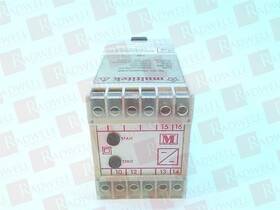
( Brand: Multitek ), ( Manufacturer Part Number: M100DV2IPEOC ), ( Part Type: Hydraulic Pneumatic )
Review MULTITEK Used
The **Multitek M100DV2IPEOC** is a high-performance, industrial-grade digital video recorder (DVR) designed to deliver robust surveillance solutions for demanding environments. Engineered with advanced hardware and software integration, this model combines reliability, scalability, and cutting-edge features to meet the needs of commercial, municipal, and enterprise security applications. Built with a compact yet durable form factor, the M100DV2IPEOC is optimized for seamless integration into existing security infrastructures, offering high-resolution recording capabilities with support for up to four analog or IP cameras, depending on configuration. Its versatile input/output options, including HDMI, VGA, and USB connectivity, ensure flexibility for both monitoring and data transfer needs, while its dual-core processor ensures smooth multitasking, even under heavy workloads.
At the heart of the M100DV2IPEOC lies a powerful **2TB internal hard drive**, providing ample storage for extended recording periods while maintaining high-quality video retention. The system supports **D1 resolution (720x480) at 30 frames per second** per channel, ensuring clear and detailed footage for critical incident analysis. Its **24/7 continuous recording** functionality, combined with motion detection and tamper-alarm capabilities, enhances security by minimizing false triggers while maximizing coverage. The DVR also features **remote viewing and management** via a user-friendly web-based interface, allowing administrators to access live feeds, playback recordings, and configure settings from anywhere with an internet connection. This remote accessibility is further bolstered by **PTZ (pan-tilt-zoom) control support**, enabling precise camera adjustments for dynamic surveillance scenarios.
Designed with **industrial-grade durability**, the M100DV2IPEOC operates reliably in a wide range of environmental conditions, including temperature fluctuations and humidity variations, making it ideal for outdoor or harsh indoor settings. Its **low-power consumption** ensures energy efficiency without compromising performance, while its **silent operation** minimizes noise disruption in sensitive environments. The device also supports **multiple recording modes**, including continuous, motion-activated, and scheduled recording, allowing for optimized storage usage and tailored surveillance strategies. Additionally, the M100DV2IPEOC includes **advanced encryption protocols** to safeguard recorded data, ensuring compliance with security and privacy regulations while preventing unauthorized access.
For enhanced scalability, the DVR supports **network expansion via Ethernet**, enabling seamless integration with other security systems, such as access control or alarm panels. Its **compatibility with third-party software** further extends its functionality, allowing for integration with enterprise security platforms for unified monitoring. The unit s **plug-and-play installation** simplifies deployment, reducing downtime and setup complexity, while its **self-diagnostic tools** help troubleshoot issues efficiently. Whether deployed in a retail environment, a corporate office, or a public facility, the **Multitek M100DV2IPEOC** delivers a dependable, feature-rich surveillance solution that balances performance, flexibility, and ease of use.
### **Pros and Cons of buying a Multitech M100 DV2 iPEoC**
#### **Pros**
1. **Reliable Cellular Connectivity** The device supports LTE-M and NB-IoT, making it ideal for low-power, wide-area network (LPWAN) applications where traditional Wi-Fi or cellular data may be unreliable. This is particularly useful in remote or industrial settings where stable connectivity is critical.
2. **Industrial-Grade Durability** Built to withstand harsh environments, the M100 DV2 is designed for rugged use, including exposure to dust, moisture, and temperature fluctuations. This makes it suitable for outdoor, automotive, or factory applications.
3. **Global LTE Support** It supports multiple global LTE bands, allowing for flexibility in deployment across different regions without requiring hardware changes. This is beneficial for businesses operating internationally or in areas with varying network coverage.
4. **Low Power Consumption** As an LTE-M and NB-IoT module, it is optimized for battery-powered devices, extending operational life in IoT applications where frequent recharging or maintenance is impractical.
5. **Compact and Modular Design** The device is small and can be integrated into existing systems, making it easier to deploy in space-constrained environments. Its modular nature allows for customization based on specific project needs.
6. **Security Features** Includes encryption and authentication protocols to secure data transmission, which is essential for applications handling sensitive information or operating in regulated industries.
7. **Wide Temperature Range** Operates effectively in extreme temperatures, from -40 C to 85 C, ensuring reliability in environments like cold storage, outdoor sensors, or automotive systems.
8. **Easy Integration with Cloud Platforms** Compatible with major IoT cloud services, enabling seamless data collection, remote monitoring, and management. This simplifies deployment for businesses already using cloud-based solutions.
9. **Long-Term Availability** Multitech is a well-established provider in the IoT space, and the M100 DV2 has been on the market for several years, suggesting continued support and availability of spare parts.
10. **Cost-Effective for LPWAN Applications** While not the cheapest option, its efficiency in low-power, long-range connectivity can reduce overall operational costs by minimizing infrastructure requirements (e.g., fewer repeaters or gateways).
---
#### **Cons**
1. **Limited Bandwidth** LTE-M and NB-IoT are designed for low-bandwidth applications (typically
2. **Higher Latency Compared to 4G/LTE** While LTE-M and NB-IoT are optimized for low power, they inherently have higher latency than traditional LTE, which could be a drawback for real-time applications.
3. **Dependence on Cellular Infrastructure** Performance is directly tied to the quality of the local cellular network. In areas with poor coverage or frequent signal drops, reliability may suffer.
4. **Limited Local Processing** The device is primarily a connectivity module and lacks advanced local processing capabilities. For applications requiring complex on-device computations, additional hardware (e.g., a microcontroller or Raspberry Pi) may be needed.
5. **Potential Compatibility Issues** If integrating with legacy systems or proprietary software, additional development work may be required to ensure seamless operation.
6. **Cost of Deployment** While the device itself may be cost-effective, the overall cost of deployment includes SIM cards, cloud subscriptions, and potential gateway infrastructure, which can add up.
7. **Firmware and Software Updates** As with any embedded device, firmware updates may be required over time. Ensuring compatibility with future updates could involve additional effort or costs.
8. **Limited Global Band Support in Some Regions** While it supports many global bands, certain regions may have restricted or non-standard frequency allocations, potentially limiting deployment flexibility.
9. **No Built-in GPS** If location tracking is a requirement, an external GPS module would need to be added, increasing complexity and cost.
10. **Learning Curve for Development** Developing applications for this device may require familiarity with Multitech s SDK or third-party tools, which could pose a challenge for teams without prior experience in IoT development.
---
### **Conclusion**
The **Multitech M100 DV2 iPEoC** is an excellent choice for **low-power, long-range IoT applications** where reliability, durability, and cellular connectivity are prioritized over high bandwidth or real-time performance. It excels in industrial, remote, or battery-powered scenarios where traditional connectivity options are impractical. However, it is not ideal for applications requiring high-speed data transfer, low latency, or significant local processing.
If your project involves **asset tracking, environmental monitoring, smart metering, or industrial automation** in areas with decent cellular coverage, this device is a strong contender. For applications needing **high-speed data, real-time control, or advanced local processing**, you may need to consider alternatives like **4G/LTE modules, Wi-Fi-based solutions, or cellular IoT devices with higher bandwidth capabilities**.
---
### **Recommendation**
**Buy the Multitech M100 DV2 iPEoC if:**- You need **LTE-M or NB-IoT connectivity** for low-power, wide-area IoT applications.
- Your use case involves **remote or industrial environments** where durability and reliability are critical.
- You require **global LTE support** without frequent hardware changes.
- Your data requirements are **low-bandwidth** (e.g., sensor data, telemetry, or basic telecommand).
- You are working with **cloud-based IoT platforms** and need a secure, modular connectivity solution.
**Avoid the Multitech M100 DV2 iPEoC if:**- You need **high-speed data transfer** (e.g., video, large file uploads).
- Your application demands **low latency** (e.g., real-time control systems).
- You are deploying in **areas with poor cellular coverage** without a backup solution.
- Your project requires **significant local processing** or advanced computing capabilities.
- You are on a tight budget and can find a **simpler or more cost-effective** alternative for your specific needs.
For most **enterprise IoT, industrial IoT, or remote monitoring applications**, the M100 DV2 is a **solid, well-supported choice**. However, always conduct a thorough assessment of your specific requirements before purchasing to ensure it aligns with your project s needs.
Details:
MULTITEK M100DV2IPEOC / USED DISCONTINUED BY MANUFACTURER, TRANSDUCER, DC/DC, INPUT: 0-96VDC, OUTPUT: 4-20MA.
part #: m100dv2ipeoc price
- $138.56
specifications generapneumati:
- brand: Multitek
- mpn: M100dv2ipeoc
- part type: Hydraulic Pneumatic
offer generapneumati:
- started: February 28, 2026
- options: Ship-to-home
- sold: 0
- quantity: 1
- availability: In Stock
shipping generapneumati:
- class: Standard
- service: Standard
- transit: 23-35 Days
- type: Fixed
- cost: $12.90
seller generapneumati:
- # reviews: 192100
- city: 1 Millennium Dr, Willingboro, NJ 08046
- rating: 99.6%
payments generapneumati:
- other
- credit card: Discover
- wallet: Google-pay
returns generapneumati:
- paid by: Buyer
- time: 30 Days
- policy: Returns Accepted
- method: Money back
general generapneumati:
- Business Industrial > Hydraulics, Pneumatics, Pumps Plumbing > Other Hydraulics Pneumatics
- condition: Used
