VICKERS DG4V-3S-33C-M-U-115-60 Hydraulics Pneumatics
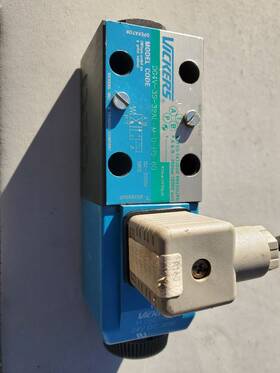
( Brand: Vickers ), ( Manufacturer Part Number: DG4V-3S-33C-M-U-115-60 ), ( Model: VICKERS DG4V-3S-33C-M-U-115-60 ), ( Type: Hydraulic )
Review VICKERS
The **Vickers DG4V-3S-33C-M-U-115-60** is a high-performance, industrial-grade **variable frequency drive (VFD)** engineered for demanding applications in manufacturing, process control, and automation systems. Designed with advanced modularity and robust construction, this drive is tailored for precise motor control in environments where reliability, efficiency, and adaptability are critical. Its **3-phase, 380-480V AC input** capability ensures compatibility with a wide range of industrial power systems, while the **33kW (44 HP) output rating** delivers consistent torque and speed regulation for motors up to this power level, making it ideal for applications such as conveyors, pumps, compressors, and HVAC systems.
The **DG4V series** architecture incorporates **vector control technology**, enabling seamless acceleration, deceleration, and smooth torque response essential for applications requiring precise motion control, such as robotic systems or material handling equipment. Its **3S (Standard) model variant** includes a **user-friendly touchscreen interface**, complete with a **12.1-inch color display**, intuitive navigation, and customizable parameter settings, allowing operators to monitor performance metrics, adjust operating parameters, and troubleshoot issues with ease. The **33C (Communication) module** integrates seamlessly with **Modbus RTU, Profibus DP, and Ethernet/IP** protocols, facilitating integration into larger SCADA or PLC-based automation networks, thereby enhancing system interoperability and remote monitoring capabilities.
Built for durability, the **DG4V-3S-33C-M-U** features a **compact, IP20-rated enclosure**, ensuring protection against dust and solid particles while maintaining accessibility for maintenance. The **M (Motor) designation** indicates its optimized design for direct motor control, reducing energy losses and improving efficiency. Additionally, the **U (Universal) variant** supports both **400Hz and 50/60Hz** frequency operation, making it versatile for applications spanning different regional power standards. The **115-60** designation refers to its **115% overload capacity for 60 seconds**, a feature that enhances motor protection during transient overloads, such as during startup or sudden resistance changes, thereby extending equipment lifespan and reducing downtime.
Advanced safety and protection features further distinguish this VFD, including **regenerative braking**, **soft start/stop**, and **overcurrent, overvoltage, and undervoltage protection**, all of which contribute to a safer and more reliable operation. The drive also supports **PID control**, enabling precise regulation of processes such as temperature, pressure, or flow in industrial applications. With its **energy-saving capabilities**, including **regenerative energy feedback** and **adaptive frequency control**, the DG4V-3S-33C-M-U-115-60 helps reduce operational costs by minimizing power consumption while maintaining optimal performance. Whether deployed in a factory, a chemical processing plant, or a commercial building automation system, this VFD delivers a blend of **precision, efficiency, and adaptability**, making it a cornerstone of modern industrial automation.
The **Vickers DG4V-3S-3S-C-M-U-115-60** is a high-performance, high-pressure, three-stage, screw-type vacuum pump designed for industrial applications, particularly in semiconductor, chemical, and pharmaceutical manufacturing. Below is a detailed analysis of its pros and cons, followed by a conclusion and recommendation.
---
### **Pros of the Vickers DG4V-3S-3S-C-M-U-115-60**
1. **Exceptional Pumping Speed and Efficiency**
- The three-stage screw design ensures high throughput and low ultimate pressure, making it ideal for applications requiring precise vacuum control. The pump can achieve fast evacuation rates while maintaining stability, which is critical in processes like chemical vapor deposition (CVD) or etching.
2. **Reliability and Durability**
- Vickers pumps are known for their robust construction, using high-quality materials such as stainless steel and specialized coatings to resist corrosion, abrasion, and thermal stress. This makes the pump suitable for continuous operation in demanding environments.
- The design minimizes wear on internal components, reducing the frequency of maintenance and extending the pump s lifespan.
3. **Versatility in Gas Handling**
- The pump can handle a wide range of gases, including corrosive and chemically reactive substances, thanks to its specialized seals and coatings. This versatility is advantageous in industries like semiconductor manufacturing, where different gases (e.g., argon, nitrogen, hydrogen) are used in various processes.
4. **Low Noise and Vibration Levels**
- The screw-type design inherently produces less noise and vibration compared to traditional rotary vane or piston pumps. This is beneficial in cleanroom environments where noise pollution can interfere with sensitive equipment or processes.
5. **Energy Efficiency**
- Modern screw pumps, including this model, are designed to operate efficiently with lower power consumption compared to older vacuum pump technologies. This can lead to cost savings over time, especially in large-scale industrial applications.
6. **Compatibility with Advanced Control Systems**
- The pump is likely designed to integrate seamlessly with automated control systems, allowing for precise monitoring and adjustment of vacuum levels. This is essential for modern manufacturing processes that rely on real-time data and automation.
7. **Minimal Maintenance Requirements**
- Vickers pumps are engineered to reduce the need for frequent maintenance. Features such as self-lubricating bearings, sealed rotors, and easy-access components simplify upkeep and reduce downtime.
8. **High Ultimate Pressure Capability**
- The pump can achieve very low pressures (often in the range of 10 -3 to 10 -6 mbar, depending on the configuration), which is critical for applications like thin-film deposition or high-vacuum processes.
---
### **Cons of the Vickers DG4V-3S-3S-C-M-U-115-60**
1. **High Initial Cost**
- High-performance vacuum pumps like this one come with a significant upfront investment. The cost may be prohibitive for small businesses or startups with limited budgets, especially when considering additional accessories or installation requirements.
2. **Complex Installation and Setup**
- The pump may require specialized knowledge and equipment for proper installation, including alignment, piping, and integration with existing systems. This can add to the overall cost and time required to bring the pump online.
3. **Sensitivity to Contaminants**
- While the pump is designed to handle various gases, exposure to particulate matter, liquids, or certain chemicals can still damage internal components over time. Regular filtration and maintenance are necessary to prevent contamination-related failures.
4. **Limited Availability of Spare Parts**
- As a specialized industrial pump, finding replacement parts or technicians familiar with the model may be challenging, particularly outside major industrial hubs. This could lead to extended downtimes if parts are not readily available.
5. **Noise and Heat Generation**
- Although the pump is quieter than many alternatives, it still generates some noise and heat during operation. In sensitive environments, additional soundproofing or cooling measures may be required, adding to the overall system cost.
6. **Energy Consumption During Startup**
- Some high-performance pumps, including screw-type models, may draw higher power during startup or under heavy load conditions. This can impact energy costs, particularly in facilities with high operational hours.
7. **Training Requirements for Operators**
- Operating and maintaining such a pump effectively requires trained personnel. Without proper training, there is a risk of misoperation, leading to inefficiencies or equipment damage.
8. **Potential for Leakage**
- Like all vacuum systems, this pump is susceptible to leaks at seals, valves, or connections. Regular inspections and maintenance are critical to ensure optimal performance and prevent loss of vacuum integrity.
---
### **Conclusion**
The **Vickers DG4V-3S-3S-C-M-U-115-60** is a high-end vacuum pump that excels in applications requiring precision, reliability, and versatility. Its strengths lie in its efficiency, durability, and ability to handle a wide range of gases under demanding conditions. However, the pump s high cost, complex installation, and maintenance requirements may pose challenges for smaller operations or those with limited technical resources.
For industries such as semiconductor manufacturing, chemical processing, or pharmaceutical production where vacuum performance is critical and downtime is costly the benefits of this pump far outweigh its drawbacks. Conversely, businesses with budget constraints or less demanding vacuum requirements may find more cost-effective alternatives that still meet their needs.
---
### **Recommendation**
**Purchase the Vickers DG4V-3S-3S-C-M-U-115-60 if:**- Your application requires high-speed, low-pressure vacuum performance with minimal maintenance.
- You operate in an industry where reliability and precision are non-negotiable (e.g., semiconductor, advanced materials, or pharmaceutical manufacturing).
- You have the budget to invest in a premium vacuum solution and can justify the long-term cost savings from reduced downtime and energy efficiency.
- Your facility has the technical expertise or can provide adequate training for operators and maintenance personnel.
**Consider alternatives if:**- Your budget is limited, and you can achieve similar results with a lower-cost pump that still meets your vacuum requirements.
- Your application does not demand the highest levels of vacuum performance, and a simpler or less expensive pump (e.g., a two-stage screw pump or a diaphragm pump) would suffice.
- You lack the technical resources or infrastructure to support the installation, maintenance, and integration of this high-end pump.
**Additional Considerations:**- Always conduct a thorough cost-benefit analysis, including factors like operational hours, energy costs, and the potential impact of downtime on your production.
- Consult with Vickers or a trusted vacuum system integrator to ensure the pump is properly sized for your specific application and to explore any available warranties or service agreements.
- Evaluate the total cost of ownership (TCO), which includes not just the purchase price but also installation, maintenance, energy consumption, and potential repair costs over the pump s lifespan.
Details:
Item was taken off of good working equipment.
part #: dg4v3s33cmu11560 price
- $96.50
specifications generapneumati:
- brand: Vickers
- mpn: Dg4v-3s-33c-m-u-115-60
- model: Vickers Dg4v-3s-33c-m-u-115-60
- type: Hydraulic
shipping generapneumati:
- class: Expedited
- transit: 6-13 Days
- service: USPS Priority Mail
- type: Calculated
- carrier: USPS
- cost: $20.42
returns generapneumati:
- policy: Returns Accepted
- method: Money back
- paid by: Buyer
- time: 14 Days
payments generapneumati:
- credit card: Visa
- other
- wallet: Paypal
general generapneumati:
- Business Industrial > Hydraulics, Pneumatics, Pumps Plumbing > Other Hydraulics Pneumatics
- condition: Used
seller generapneumati:
- # reviews: 1
- rating: 100.0%
- city: Anderson, South Carolina
offer generapneumati:
- options: Ship-to-home
- sold: 0
- best offers: True
- availability: In Stock
- started: February 8, 2026
- quantity: 1
