PARKER AD007B25T9A1 Hydraulic Diaphragm Accumulator Bar 3600 250 4.6 Cu.
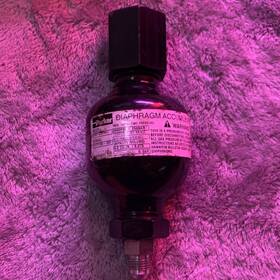
( Brand: Parker ), ( Manufacturer Part Number: AD007B25T9A1 ), ( Type: Hydraulic )
Review PARKER Hydraulic Diaphragm Accumulator Psi 250 Bar 4.6 Cu. Inch
The **Parker AD007B25T9A1 Hydraulic Diaphragm Accumulator** is a high-performance, precision-engineered energy storage device designed to absorb and release hydraulic pressure with exceptional efficiency and reliability. Part of Parker s renowned **AD Series**, this accumulator is specifically tailored for demanding industrial applications where consistent performance under extreme conditions is critical. With a **3600 cc (4.6 liters) effective volume**, it provides ample capacity for surge suppression, pressure compensation, and shock absorption in hydraulic systems, ensuring smooth operation and extended equipment lifespan. Built to withstand pressures up to **250 bar (3,625 psi)**, this accumulator is ideal for heavy-duty machinery, mobile hydraulics, and high-pressure industrial processes where reliability cannot be compromised.
The **diaphragm design** of this accumulator offers several key advantages, including superior contamination resistance, reduced maintenance requirements, and the ability to handle aggressive fluids without degradation. The **nitrile rubber diaphragm** ensures compatibility with a wide range of hydraulic oils, including mineral, synthetic, and biodegradable fluids, while its sealed construction prevents internal leakage, even under prolonged exposure to high pressures. The **T9A1 designation** indicates a **pre-charged accumulator** with nitrogen gas, which provides an optimal balance between energy storage and system responsiveness. This pre-charging eliminates the need for external gas supply systems, simplifying installation and reducing potential failure points.
Constructed from **high-strength steel components**, including a **forged steel cylinder and heavy-duty end caps**, this accumulator delivers exceptional durability and resistance to fatigue, even in harsh environments. The **flanged connection (AN or ISO standard, depending on configuration)** ensures secure and leak-proof integration with hydraulic lines, while the **pressure relief valve (if equipped)** provides an additional layer of safety by preventing over-pressurization. The **AD007 series** is also designed with **easy accessibility** for diaphragm replacement, minimizing downtime during maintenance and extending the accumulator s operational life.
Whether deployed in **construction equipment, offshore drilling rigs, industrial presses, or aerospace applications**, this Parker accumulator delivers consistent performance under the most demanding conditions. Its **compact yet robust design** allows for flexible integration into existing hydraulic systems, while its **long-term reliability** ensures minimal downtime and reduced operational costs. By effectively managing pressure spikes, compensating for system leaks, and absorbing hydraulic shocks, the **Parker AD007B25T9A1** enhances overall system efficiency, prolongs component life, and contributes to safer, more productive operations. Built to Parker s exacting standards, this accumulator represents a premium solution for engineers and operators seeking uncompromising hydraulic performance.
### **Parker AD007B25T9A1 Hydraulic Diaphragm Accumulator (3600 psi / 250 bar, 4.6 L) Analysis**
#### **Pros**
1. **High Pressure Rating (250 bar / 3600 psi)**
- Suitable for demanding hydraulic systems requiring high-pressure storage, such as industrial machinery, mobile hydraulics, or heavy-duty applications.
- Compatible with systems where energy absorption and shock mitigation are critical.
2. **Large Volume (4.6 L)**
- Offers significant energy storage capacity, making it ideal for systems requiring frequent high-volume fluid displacement (e.g., presses, cranes, or hydraulic lifts).
- Helps reduce pump sizing requirements by absorbing peak demand.
3. **Diaphragm Design**
- Diaphragm accumulators are generally more durable than bladder or piston types in applications with contaminants or abrasive fluids, as they have fewer moving parts exposed to direct fluid contact.
- Lower maintenance compared to piston accumulators, which may require periodic seal replacement.
4. **Versatility in Applications**
- Works well in systems where fluid cleanliness is moderate (though pre-filtering is still recommended to extend diaphragm life).
- Can be used in both stationary and mobile hydraulic systems (e.g., construction, mining, or manufacturing).
5. **Compatibility with Parker s Reliability**
- Parker is a well-established brand with a reputation for quality and after-sales support, ensuring availability of replacement parts and technical assistance.
- Designed to meet industry standards for safety and performance.
6. **Modular and Replaceable Components**
- The diaphragm and pre-charge valve are replaceable, allowing for cost-effective maintenance rather than full unit replacement.
- Easier to service than piston accumulators, which may require disassembly of the entire unit.
---
#### **Cons**
1. **Limited Contaminant Tolerance**
- While diaphragm accumulators are more robust than bladder types, they are still sensitive to particulate contamination, which can degrade the diaphragm over time.
- Requires proper filtration (typically 10 25 microns) upstream to prevent premature failure.
2. **Higher Initial Cost Compared to Bladder Accumulators**
- Generally more expensive than bladder-type accumulators of similar size due to the diaphragm s construction and durability features.
- Cost may be justified for high-pressure or long-term applications but could be overkill for low-pressure or clean-system uses.
3. **Space Requirements**
- The 4.6 L volume is substantial, requiring dedicated space in the hydraulic system. This may be a limitation in compact or retrofitted applications.
- Installation must account for proper mounting (e.g., vertical or horizontal) to avoid fluid trapping or diaphragm distortion.
4. **Pre-Charge Valve Maintenance**
- The pre-charge valve (nitrogen charging port) can be a weak point if not maintained properly. Leaks or improper charging can lead to system inefficiencies or safety hazards.
- Requires periodic inspection to ensure nitrogen pressure remains within specifications.
5. **Potential for Diaphragm Failure Under Extreme Conditions**
- In applications with frequent pressure cycling, extreme temperatures, or chemical exposure, the diaphragm may degrade faster than expected.
- Not ideal for systems with aggressive fluids (e.g., hydraulic oils with additives that attack elastomers).
6. **Installation Complexity**
- Requires proper nitrogen pre-charging (typically 50 70% of working pressure) and correct fluid filling procedures to avoid damage.
- Incorrect installation (e.g., over-tightening fittings) can lead to leaks or diaphragm puncture.
---
### **Key Considerations Before Purchase**
1. **System Compatibility**
- Verify that the accumulator s pressure and volume match your system s requirements. Oversizing can lead to inefficiencies, while undersizing may cause instability.
- Confirm fluid compatibility with the diaphragm material (typically nitrile or EPDM; check Parker s documentation for your specific model).
2. **Maintenance Plan**
- Budget for regular inspections of the diaphragm, pre-charge valve, and fittings. Replace the diaphragm every 5 10 years or as per Parker s guidelines, depending on usage.
- Ensure your hydraulic system includes proper filtration (e.g., 10-micron absolute filter) to extend accumulator life.
3. **Safety and Installation**
- Follow Parker s installation manual strictly, including proper nitrogen charging and fluid filling procedures. Overfilling or incorrect charging can cause explosions.
- Install pressure relief valves and bypass lines to protect the accumulator from overpressure events.
4. **Alternatives**
- If cost is a concern, consider a **bladder accumulator** (e.g., Parker AD007B25T9A1 with a bladder) for cleaner systems, though they have lower pressure and contaminant tolerance.
- For very high-cycle applications, a **piston accumulator** may offer longer life but requires more maintenance.
5. **Warranty and Support**
- Parker offers warranties and technical support, but verify coverage for your specific application (e.g., industrial vs. mobile use).
- Purchase from authorized dealers to ensure genuine parts and valid warranties.
---
### **Conclusion**
The **Parker AD007B25T9A1** is a robust, high-performance accumulator well-suited for **high-pressure (250 bar), high-volume hydraulic systems** where durability and energy storage are critical. Its diaphragm design provides a balance between contamination resistance and longevity, making it ideal for industrial, mobile, or heavy-duty applications with moderate fluid cleanliness.
However, it is **not the best choice** for:- Systems with **extremely dirty fluids** (requires strict filtration).
- **Low-pressure or clean-system applications** (bladder accumulators may suffice).
- **Space-constrained installations** (4.6 L is large).
- **Applications with aggressive fluids** (risk of diaphragm degradation).
If your system demands **reliability, high pressure, and moderate contaminant tolerance**, this accumulator is a strong investment. For cost-sensitive or clean-system applications, alternatives like bladder accumulators may be more appropriate.
### **Recommendation**
**Buy the Parker AD007B25T9A1 if:**- Your system operates at **250 bar or higher** and requires **significant energy storage**.
- You can **maintain proper filtration (10 25 microns)** and **regular inspections**.
- The **space and budget** allow for this high-capacity, durable unit.
- You prioritize **Parker s brand reliability** and after-sales support.
**Avoid or consider alternatives if:**- Your system has **poor fluid cleanliness** without adequate filtration.
- You need a **lower-cost or smaller-volume** solution.
- The application involves **extreme temperatures or chemical exposure** that may degrade the diaphragm.
- You can use a **bladder accumulator** for a simpler, lower-cost option in clean systems.
**Final Verdict:** For the right application, this is a **high-quality, long-lasting accumulator** that justifies its cost. Ensure proper installation, maintenance, and system compatibility to maximize its lifespan and performance.
Details:
Selling as used but was sold to me an open box unused unit with signs of shelf wear. Parker ships 0psi charge and it does have psi. I do my best to represent the item as clearly possible.
part #: ad007b25t9a1 prices
- $719.96-$1800.00
specifications generapneumati:
- brand: Parker
- mpn: Ad007b25t9a1
- type: Hydraulic
payments generapneumati:
- other
- credit card: Mastercard
- wallet: Paypal
general generapneumati:
- condition: Used
- Business Industrial > Hydraulics, Pneumatics, Pumps Plumbing > Other Hydraulics Pneumatics
returns generapneumati:
- policy: No Returns
offer generapneumati:
- availability: In Stock
- options: Ship-to-home
- quantity: 1
- best offers: True
- sold: 0
- started: April 7, 2026
seller generapneumati:
- rating: 99.0%
- # reviews: 260
- city: Manchester, Tennessee
shipping generapneumati:
- class: Standard
- transit: 4-11 Days
- type: Fixed
- cost: $12.00
- service: USPS Ground Advantage
- carrier: USPS
Parker AD007B25T9A1 Is Similar To:
- 0-15cn-2-5q-e2-50-n4n4-1-98 Parker Hydraulic Filter Used (33.6% similar) Using the ask a question link at end of this item or by ING on our username surplus and there. Prices for these options may differ from standard ground shipping. Condition: used Parker 0-15CN-2-5Q-E2-50-N4N4-1-98, hydraulic filter. The cost of combined shipping depends on weight, location buyer and ...(October 19th, 2018)
- 06r113ac Parker 250 Psi Regulator Npt 4 1 Pressure 175 Pneumatic (35.4% similar) New in box with literature and accessories...(June 1st, 2015)
- 07l11bc Parker Original Inch Pneumatic Mist Lubricator New In Box (23.3% similar) ...(February 17th, 2019)
- 07l31be Parker Pneumatic Lubricator Psi (33.3% similar) Parker 07L31BE pneumatic lubricator 150 psi PRI21 manufacturer: Parker model: type: used, in working condition. This item is used. Marketing, listing apps, application...(March 11th, 2018)
- 102359-1-gb Parker Hydraulic Filter New In Package (39.7% similar) No return if the item has been hooked up or used. The items available here is new Parker filter element that in excellent condition. The plastic seal has a small slit in top as shown pics but rest is intact. Location 3C...(September 2nd, 2018)
- Filter 12f47ec Max 250 Coalescing Psi Parker (9.6% similar) Used Parker 12F47EC coalescing filter 250 psi max 175 degree temp max. In good condition, used very little. 3/4 not inlet and outlet...(May 30th, 2015)
- 14r113fcsb Parker Schrader Bellows Air Regulator New Gauge Psi (33.6% similar) New Schroeder valve 250 psi 14R113FCSB air regulator gauge 200PSI...(May 9th, 2018)
- 155-0-02 Parker New Scm Serviceman Plus Hydraulic Diagnostic Meter Value (36.6% similar) Part: SCM155-0-02 prices...(April 4th, 2018)
- 15f12ea Parker Coalescing Filter Cfm Port Modular Conn Max Psi (32.2% similar) Parker msrp: model: 15F12EA: port SIZE1 4MAXIMUM working pressure psi 150BOWL feet per MINUTE34MAXIMUM temperature f 125BOWL CAPACITY2. Bowl guard coat steel this listing is for one filter that in the picture as well described. Crusty October cm 277 cab Logan bin comes exactly as shown in photos...(October 26th, 2018)
- 15p110qbrks121 Parker Hydraulic Filter Assy Part Number (41.2% similar) Parker hydraulic filter assay part number 15P110QBRKS121...(May 4th, 2018)
- 172pl-4-2 Parker Male Branch Tees Diameter Psi New (36.6% similar) Range to 150 degrees outside dia Parker 172PL-4-2 male branch tees 1/4 diameter 300 psi new manufacturer: Parker Parker item number: specs: tee pressure 300TEMP...(November 10th, 2018)
