PARKER A2N0010D1K Piston Accumulator Cu. 3000
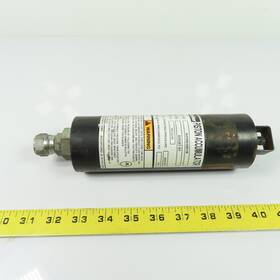
( Brand: Parker ), ( Manufacturer Part Number: A2N0010D1K ), ( Part Type: Piston ), ( Country Of Manufacture: Usa )
Review PARKER Piston Accumulator Cu. Inch 3000 Psi
The **Parker Hannifin A2N0010D1K Piston Accumulator (10" x 3000 PSI)** is a high-performance, precision-engineered hydraulic accumulator designed to store and release energy efficiently within demanding industrial, mobile, and marine applications. This robust unit belongs to the **A2N series**, renowned for its compact yet durable construction, making it ideal for environments where space is limited but reliability is non-negotiable. The accumulator features a **10-inch bore diameter**, providing a substantial fluid capacity for absorbing hydraulic shocks, smoothing pressure fluctuations, and compensating for system leaks critical functions in machinery where sudden pressure surges could otherwise cause damage or operational inefficiencies. Built to withstand **3000 PSI working pressure**, this accumulator is constructed from **high-grade steel components**, including a **forged piston rod** and a **seamless steel cylinder**, ensuring exceptional strength and resistance to fatigue, corrosion, and wear over extended service life. The **nitrogen pre-charged bladder system** (standard with Parker s **A2N design**) guarantees consistent performance by maintaining a clean separation between hydraulic fluid and gas, preventing contamination and extending the accumulator s operational lifespan. This model is equipped with a **flanged connection** (1-inch NPT or customizable per application), allowing for seamless integration into existing hydraulic systems, while its **modular design** enables easy installation and maintenance. Whether deployed in **construction equipment, off-highway vehicles, or heavy-duty hydraulic presses**, the A2N0010D1K delivers precise energy management, reducing system stress and enhancing overall efficiency. Parker s rigorous quality control ensures that every component meets stringent industry standards, making this accumulator a dependable choice for engineers and operators seeking a balance of power, durability, and performance in high-pressure hydraulic applications.
The **Parker A2N0010D1K** is a piston-type nitrogen gas accumulator designed for hydraulic systems, offering high energy storage capacity and durability. Below is a detailed breakdown of its pros and cons, followed by a conclusion and recommendation.
---
### **Pros of the Parker A2N0010D1K Piston Accumulator**
1. **High Energy Storage Capacity**
The 10-liter (3000 psi) model provides substantial energy storage, making it suitable for applications requiring frequent hydraulic shocks, such as press brakes, injection molding machines, or heavy-duty hydraulic systems. This reduces the workload on pumps and extends their lifespan.
2. **Durability and Long Lifespan**
Parker is a well-established brand known for high-quality hydraulic components. The A2N0010D1K features a robust piston design, corrosion-resistant materials (such as stainless steel or coated internals), and reinforced seals, which contribute to a longer operational life compared to cheaper alternatives.
3. **Precision Engineering and Reliability**
The accumulator is designed with tight tolerances, ensuring consistent performance under high-pressure conditions. The piston s smooth operation minimizes wear, reducing the risk of leaks or failure over time.
4. **Compatibility with Hydraulic Systems**
It is designed to integrate seamlessly with standard hydraulic systems operating at pressures up to 3000 psi (207 bar). The threaded ports (typically SAE or metric) make it easy to install in existing setups without major modifications.
5. **Energy Efficiency**
By absorbing pressure spikes and smoothing out system fluctuations, the accumulator reduces energy waste. This can lead to lower operational costs and improved system efficiency, especially in cyclic applications.
6. **Maintenance-Friendly Design**
While piston accumulators require periodic inspection (e.g., checking nitrogen charge, seal condition, and piston movement), Parker s design includes accessible components for maintenance. Some models also feature built-in pressure gauges or valves for easier monitoring.
7. **Wide Range of Applications**
Suitable for industrial machinery, automotive testing, aerospace hydraulics, and other high-demand environments where hydraulic stability is critical.
---
### **Cons of the Parker A2N0010D1K Piston Accumulator**
1. **Higher Upfront Cost**
Parker accumulators are premium products, and the A2N0010D1K is no exception. The cost is significantly higher than that of basic bladder or diaphragm-type accumulators, which may be overkill for low-pressure or low-demand applications.
2. **Requires Proper Installation and Maintenance**
Unlike bladder accumulators, piston accumulators are more sensitive to installation errors (e.g., incorrect orientation, improper nitrogen charging, or contamination). Poor installation can lead to premature failure, leaks, or even catastrophic piston seizure. Regular maintenance (e.g., checking nitrogen pressure, lubricating seals) is essential but adds to operational overhead.
3. **Sensitivity to Contamination**
Piston accumulators are more prone to contamination issues than bladder types. Hydraulic fluid or debris entering the piston chamber can cause binding, scoring, or seal damage. This requires strict filtration and system cleanliness.
4. **Limited Flexibility in Pressure Adjustment**
While the accumulator is pre-charged to a specific nitrogen pressure (often 300 psi or similar), adjusting the pre-charge requires specialized tools and knowledge. Over- or under-charging can lead to inefficiency or damage.
5. **Space Requirements**
At 10 liters, this is a relatively large accumulator. In compact hydraulic systems, space constraints may make it difficult to install without modifications.
6. **Potential for Leaks Over Time**
Seals in piston accumulators can degrade due to repeated expansion/contraction cycles, especially in harsh environments. While Parker s seals are high-quality, they are not immune to wear, and replacement parts may incur additional costs.
7. **Not Ideal for Low-Pressure Applications**
If the hydraulic system operates at much lower pressures (e.g., below 1000 psi), a smaller or bladder-type accumulator may be more cost-effective and sufficient for the task.
---
### **Conclusion**
The **Parker A2N0010D1K** is an excellent choice for high-performance hydraulic systems where reliability, durability, and energy storage are critical. Its superior engineering makes it ideal for industrial applications with frequent pressure cycles, high demands, or where system stability is non-negotiable. However, its higher cost, maintenance requirements, and sensitivity to installation and contamination mean it may not be justified for simpler or low-pressure systems.
For applications requiring **high efficiency, long-term reliability, and heavy-duty performance**, this accumulator is a strong investment. For **budget-conscious or low-demand systems**, a bladder or diaphragm accumulator might offer comparable performance at a lower cost.
---
### **Recommendation**
**Buy the Parker A2N0010D1K if:**- You operate a high-pressure hydraulic system (e.g., 2000 3000 psi) with frequent shocks or cyclic loads.
- Your application demands long-term reliability and minimal maintenance downtime.
- You have the budget for a premium hydraulic component and can ensure proper installation and maintenance.
- The system benefits significantly from energy smoothing and pump relief.
**Avoid or consider alternatives if:**- Your system operates at lower pressures (below 1500 psi) where a smaller bladder accumulator would suffice.
- Budget constraints make the higher cost prohibitive.
- Your hydraulic system lacks proper filtration or maintenance protocols, increasing the risk of contamination-related failures.
- Space is extremely limited, and a compact alternative (e.g., a 5-liter piston accumulator) could work.
**Alternatives to Consider:**- **Bladder Accumulator (e.g., Parker A2B series):** Lower cost, simpler maintenance, but less durable for high-pressure applications.
- **Diaphragm Accumulator (e.g., Parker A2D series):** Good for moderate pressures, but less efficient for high-cycle applications.
- **Smaller Piston Accumulator (e.g., 5-liter model):** If 10 liters is overkill, a smaller piston accumulator may suffice with lower cost.
Ultimately, the **A2N0010D1K is a robust, high-performance accumulator** that justifies its cost in the right applications. Ensure you weigh its benefits against your specific system requirements before purchasing.
Details:
Next Day Second Air Services are available. We choose the carrier. Maximum operating pressure: 3000 PSI. Need it urgently.
LOCAL PICK-UP, Prefer to pick it up yourself. 3000 PSI - Parker Used. Quick Links Contact. Capacity: 10 CU.IN.
Your phone number and business name. Expedited shipping is also available. Parker A2N0010D1K Piston Accumulator 10 CU.IN. After the return period has ended, you can no longer product.
Will there be a dock or forklift.
part #: a2n0010d1k prices
- $449.99-$900.00
specifications generapneumati:
- brand: Parker
- mpn: A2n0010d1k
- part type: Piston
- country of manufacture: Usa
general generapneumati:
- condition: Used
- Business Industrial > Hydraulics, Pneumatics, Pumps Plumbing > Other Hydraulics Pneumatics
returns generapneumati:
- policy: Returns Accepted
- paid by: Buyer
- method: Money back
- time: 30 Days
payments generapneumati:
- credit card: Mastercard
- wallet: Apple-pay
- other
seller generapneumati:
- # reviews: 65404
- rating: 99.8%
- city: Middlebury, Indiana
offer generapneumati:
- started: May 15, 2026
- sold: 0
- best offers: True
- quantity: 1
- options: Ship-to-home
- availability: In Stock
shipping generapneumati:
- service: USPS Priority Mail
- cost: $15.99
- carrier: USPS
- transit: 4-8 Days
- type: Fixed
- class: Expedited
Parker A2N0010D1K Is Similar To:
- 06r113ac Parker 250 Psi Regulator Npt 4 1 Pressure 175 Pneumatic (42.3% similar) New in box with literature and accessories...(June 1st, 2015)
- 07l11bc Parker Original Inch Pneumatic Mist Lubricator New In Box (26.2% similar) ...(February 17th, 2019)
- 07l31be Parker Pneumatic Lubricator Psi (41.7% similar) Parker 07L31BE pneumatic lubricator 150 psi PRI21 manufacturer: Parker model: type: used, in working condition. This item is used. Marketing, listing apps, application...(March 11th, 2018)
- Filter 12f47ec Max 250 Coalescing Psi Parker (11.9% similar) Used Parker 12F47EC coalescing filter 250 psi max 175 degree temp max. In good condition, used very little. 3/4 not inlet and outlet...(May 30th, 2015)
- 14r113fcsb Parker Schrader Bellows Air Regulator New Gauge Psi (42% similar) New Schroeder valve 250 psi 14R113FCSB air regulator gauge 200PSI...(May 9th, 2018)
- 15f12ea Parker Coalescing Filter Cfm Port Modular Conn Max Psi (40.3% similar) Parker msrp: model: 15F12EA: port SIZE1 4MAXIMUM working pressure psi 150BOWL feet per MINUTE34MAXIMUM temperature f 125BOWL CAPACITY2. Bowl guard coat steel this listing is for one filter that in the picture as well described. Crusty October cm 277 cab Logan bin comes exactly as shown in photos...(October 26th, 2018)
- 172pl-4-2 Parker Male Branch Tees Diameter Psi New (31.8% similar) Range to 150 degrees outside DOA Parker 172PL-4-2 male branch tees 1/4 diameter 300 psi new manufacturer: Parker Parker item number: specs: tee pressure 300TEMP...(November 10th, 2018)
- 201200 Parker Piston Plug Repair Kit New (39.2% similar) ...(May 4th, 2018)
- 20r113gc Parker Npt Port Brass Miniature Regulator To Psi Range Max (37.1% similar) Great deal you get what see. In great condition came out of an high end laboratory...(September 22nd, 2018)
- 250 1 27r113ab Psi Npt Regulator 4 Pneumatic 175 Parker Pressure (29.3% similar) 100% satisfaction guarantee. Brand new Parker 250 psi 175 f 1/4 not pneumatic pressure regulator, 27R113AB new ship within 24 hours...(May 24th, 2015)
- 410-n Parker Pneumatic Full Pressure Blow Gun Psi Free Ship (32.8% similar) ...(November 12th, 2018)
