BUTTERWORTH-HEINEMANN 978-0-08-096674-8 Elsevier Hydraulics Pneumatics Technicians Engineers Andrew Parr 3RD
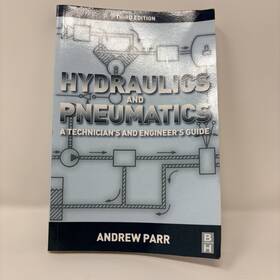
( Brand: Butterworth-heinemann ), ( Country Of Origin: Uk ), ( Type: Textbook, Guide, Reference, Manual ), ( Unit Type: Book ), ( EAN: 9780080966748 )
Review BUTTERWORTH HEINEMANN Elsevier Hydraulics And Pneumatics Technicians Engineers Guide Andrew Parr 3rd Ed
**"Hydraulics, Pneumatics: Technicians & Engineers, Third Edition" by Andrew Parr, published by Butterworth-Heinemann under the Elsevier imprint (ISBN: 978-0-08-096674-8), is an indispensable, meticulously crafted resource designed to bridge the gap between theoretical fluid power principles and their practical, real-world applications. This authoritative third edition serves as an indispensable guide for engineers, technicians, and students alike, offering a comprehensive exploration of both hydraulic and pneumatic systems with unparalleled clarity and depth. Andrew Parr, a seasoned expert in fluid power technology, distills complex concepts into accessible, well-structured content, ensuring that readers whether novices or seasoned professionals can grasp the fundamentals and advanced intricacies of these critical engineering disciplines.
The book begins with a robust foundation, systematically introducing the fundamental principles of fluid mechanics, pressure, flow, and energy transfer, before delving into the specific behaviors of hydraulic and pneumatic systems. Each chapter is meticulously organized to progress logically from basic theory to sophisticated design, troubleshooting, and maintenance techniques, making it an invaluable reference for both educational and on-the-job training. The third edition has been thoroughly updated to reflect the latest advancements in technology, industry standards, and best practices, ensuring that readers are equipped with the most current knowledge in the field. Key topics such as circuit design, component selection, system efficiency, and safety protocols are examined in detail, providing readers with the tools needed to optimize performance, reduce energy consumption, and enhance reliability in hydraulic and pneumatic applications.
What sets this edition apart is its emphasis on practical, hands-on learning. The text is enriched with a wealth of real-world examples, case studies, and illustrative diagrams that clarify theoretical concepts and demonstrate their application in diverse industries, from automotive and aerospace to manufacturing and robotics. Additionally, the inclusion of troubleshooting guides and diagnostic techniques empowers technicians and engineers to identify and resolve common system failures with precision, minimizing downtime and maximizing productivity. The book also addresses emerging trends, such as the integration of smart sensors and digital control systems, offering insights into how fluid power technology is evolving to meet the demands of Industry 4.0 and beyond.
Beyond its technical rigor, the book is written with a clear, engaging style that makes dense engineering topics approachable and engaging. Each section is supported by clear explanations, step-by-step procedures, and practical exercises, ensuring that readers can apply their knowledge confidently. Whether used as a primary textbook in academic settings or as a field reference for professionals, this edition stands as a definitive resource for anyone seeking to master the art and science of hydraulics and pneumatics. With its blend of theoretical depth, practical insight, and up-to-date industry knowledge, it remains an essential addition to the library of every engineer, technician, and student invested in the dynamic field of fluid power technology.
### **Pros and Cons of Buying *Hydraulics and Pneumatics for Technicians and Engineers* (3rd Edition) by Andrew Parr (ISBN: 978-0-08-096674-8)**
#### **Pros**
1. **Comprehensive Coverage of Fundamentals**
The book provides a thorough introduction to both hydraulics and pneumatics, making it suitable for beginners as well as those seeking to reinforce their understanding. It explains core principles such as fluid mechanics, circuit design, and system operation in a structured manner.
2. **Practical and Technical Focus**
Written for technicians and engineers, the content emphasizes real-world applications, troubleshooting techniques, and practical problem-solving. This makes it valuable for those working in industrial, automotive, or aerospace fields where fluid power systems are critical.
3. **Clear Explanations and Illustrations**
The text includes numerous diagrams, schematics, and visual aids that simplify complex concepts. The third edition likely incorporates updated illustrations to reflect modern hydraulic and pneumatic systems, improving clarity for readers.
4. **Problem-Solving Approach**
The book includes worked examples and exercises that encourage active learning. This is particularly useful for students or professionals preparing for technical exams or certifications (e.g., in fluid power systems).
5. **Relevance to Industry Standards**
As a Butterworth-Heinemann/Elsevier publication, the book aligns with industry best practices and may reference standards used in fluid power engineering. This ensures that the content remains practical and applicable in professional settings.
6. **Balanced Treatment of Both Disciplines**
Unlike some texts that focus solely on hydraulics or pneumatics, this book provides a balanced overview of both, allowing readers to compare and contrast the two technologies effectively.
7. **Useful for Self-Study and Professional Development**
The structured format makes it ideal for self-paced learning. Professionals looking to upskill or transition into fluid power systems may find it a reliable resource.
---
#### **Cons**
1. **Potential Outdated Content (Depending on Publication Date)**
While the third edition is likely recent, technical fields evolve rapidly. Some sections particularly those covering emerging technologies or newer industry standards may require supplementation with additional resources or online updates.
2. **Limited Depth for Advanced Specializations**
The book is designed for intermediate learners rather than experts. Those specializing in advanced hydraulic control systems, mechatronics, or cutting-edge pneumatic applications may need to supplement it with more specialized texts.
3. **Price Consideration**
As a professional-grade textbook, the cost may be prohibitive for casual readers or students without financial support. The price could be a barrier for those seeking to purchase it outright rather than accessing it through a library or digital alternatives.
4. **Assumption of Prior Knowledge**
While beginner-friendly, some sections assume familiarity with basic engineering or physics concepts. Readers with minimal technical background may struggle without additional foundational resources.
5. **Lack of Interactive or Digital Features**
Unlike some modern textbooks, this edition may not include online quizzes, simulations, or multimedia content. Readers who prefer interactive learning may find it less engaging compared to digital alternatives.
6. **Niche Audience**
The book is tailored specifically to technicians and engineers, which may limit its appeal to those in unrelated fields (e.g., general mechanics, non-engineering students, or hobbyists). Its focus on technical details might feel overly dense for broader audiences.
---
### **Conclusion**
*Hydraulics and Pneumatics for Technicians and Engineers* (3rd Edition) is a well-regarded resource for individuals seeking a practical, hands-on understanding of fluid power systems. Its strengths lie in its clarity, practical examples, and balanced coverage of hydraulics and pneumatics, making it ideal for students, apprentices, and professionals in technical roles. However, its limitations such as potential outdatedness, lack of advanced depth, and cost should be considered, particularly for readers with specialized needs or those on a tight budget.
For most technicians and engineers working in fluid power, this book is a worthwhile investment due to its reliability and industry relevance. Those with access to institutional libraries or digital alternatives may also benefit from exploring it without purchasing a physical copy.
### **Recommendation**
**Buy the book if:**- You are a technician, engineer, or student in fluid power systems and need a clear, practical guide.
- You prefer a textbook with strong visuals and problem-solving focus.
- You lack access to other comprehensive resources on hydraulics and pneumatics.
**Consider alternatives if:**- You require advanced or highly specialized content beyond introductory/intermediate levels.
- You are on a tight budget and can access the book through a library or digital rental.
- You prefer interactive or multimedia-enhanced learning materials.
Ultimately, this book remains a strong choice for those who prioritize technical accuracy and practical application in fluid power engineering.
Details:
A valuable resource for anyone involved in the operation, maintenance, or design of hydraulic and pneumatic machinery industrial settings. It covers essential topics for both engineers and technicians, from fundamental principles components like pumps, valves, actuators to control systems, safety, fault-finding, maintenance. This listing is for 'Hydraulics and Pneumatics: A Technicians Engineers Guide, Third Edition' by Andrew Parr. Published by Butterworth-Heinemann an imprint of Elsevier, this comprehensive textbook offers a practical, technician-focused approach to understanding and working with hydraulic pneumatic systems.
part #: 9780080966748 prices
- $22.29-$64.95
specifications generapneumati:
- brand: Butterworth-heinemann
- country of origin: Uk
- type: Textbook, Guide, Reference, Manual
- unit type: Book
- ean: 9780080966748
seller generapneumati:
- rating: 100.0%
- city: Tangent, Oregon
- # reviews: 858
payments generapneumati:
- other
- credit card: Visa
- wallet: Apple-pay
general generapneumati:
- condition: Used
- Business Industrial > Hydraulics, Pneumatics, Pumps Plumbing > Other Hydraulics Pneumatics
offer generapneumati:
- availability: In Stock
- started: April 9, 2026
- options: Ship-to-home
- quantity: 1
- sold: 0
shipping generapneumati:
- type: Fixed
- transit: 4-9 Days
- service: Economy
- class: Economy
- cost: $0.00
returns generapneumati:
- time: 30 Days
- method: Money back
- paid by: Buyer
- policy: Returns Accepted
