FESTO 540896 Electrical Interface VMPA1-MPM-EPL-GU
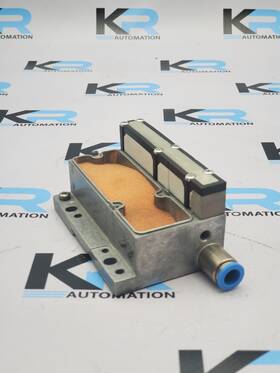
( Brand: Festo ), ( Manufacturer Part Number: 540896 )
Review FESTO Electrical Interface
The **Festo 540896 Electrical Interface (VMPA1-MPMA-EPL-GU)** is a high-performance, modular component designed to facilitate seamless communication and power integration within industrial automation systems, particularly those utilizing Festo s advanced pneumatic and electric actuator technologies. This interface module serves as a critical bridge between the **VMPA1** (Vacuum Manipulator Actuator) and external control systems, enabling precise control, monitoring, and data exchange while ensuring robust electrical connectivity. Engineered with Festo s signature reliability and precision, the 540896 module is equipped with a **MPMA (Multi-Purpose Module Adapter)** interface, allowing for flexible integration with various control platforms, including PLCs, motion controllers, or fieldbus systems like PROFINET or EtherCAT. The **EPL (Electrical Power Line)** designation underscores its capability to handle both control signals and power supply requirements, simplifying wiring and reducing system complexity by consolidating multiple functions into a single, compact unit.
The interface features a **GU (Gear Unit) connection**, ensuring compatibility with Festo s vacuum gripper systems, where it provides real-time feedback on actuator position, force, and vacuum levels, thereby enhancing process automation and quality control. Its robust construction, with IP65-rated protection, makes it suitable for demanding industrial environments where exposure to dust, moisture, or temperature fluctuations is common. The module s modular design allows for easy installation and replacement, minimizing downtime during maintenance or system upgrades. Additionally, the 540896 interface supports high-speed data transmission, enabling rapid response times critical for applications in pick-and-place operations, assembly lines, or material handling systems. Whether deployed in food processing, automotive manufacturing, or logistics, this component ensures efficient, repeatable performance while adhering to Festo s commitment to energy efficiency and sustainability.
### **Pros and Cons of buying a FESTO 540896 (Electrical Interface VMPA1-MPMA-EPL-GU)**
#### **Pros:**1. **Compatibility with Festo Systems** This interface is designed specifically for Festo s modular pneumatic and electrical systems, ensuring seamless integration with existing or new Festo setups. It supports MPMA (Modular Pneumatic Manifold Assembly) and VMPA (Variable Modular Pneumatic Assembly) systems, making it ideal for automated processes.
2. **Electrical Signal Conversion** The unit converts pneumatic signals (pressure, position, or flow) into electrical signals (e.g., 0 10 V, 4 20 mA, or digital outputs), enabling better monitoring and control via PLCs, HMIs, or SCADA systems. This enhances automation and data logging capabilities.
3. **Compact and Modular Design** The interface is part of Festo s modular range, allowing easy installation in tight spaces. Its plug-and-play design simplifies wiring and reduces installation time compared to custom-built solutions.
4. **High Reliability and Durability** Festo is known for robust industrial components with long lifespans. The electrical interface is built for harsh environments, with protection against dust, moisture (IP65/67 ratings), and temperature variations, ensuring consistent performance in manufacturing or automation settings.
5. **Support for Advanced Control** The interface can interface with Festo s CPX (Compact Pneumatic Controller) or other third-party controllers, enabling precise control of pneumatic actuators, valves, and cylinders. This is useful in applications requiring position feedback, pressure regulation, or sequence control.
6. **Easy Integration with IoT and Industry 4.0** With electrical outputs, the interface can feed data into industrial networks, enabling remote monitoring, predictive maintenance, and integration with cloud-based systems. This aligns with modern smart factory trends.
7. **Technical Support and Documentation** Festo provides comprehensive manuals, wiring diagrams, and technical support, making troubleshooting and setup more straightforward for engineers and technicians.
8. **Cost-Effective for Festo Users** If you already have a Festo pneumatic system, purchasing this interface avoids the need for third-party converters, potentially reducing long-term costs and compatibility issues.
---
#### **Cons:**1. **Limited to Festo Ecosystem** The interface is optimized for Festo components. If your system mixes Festo and non-Festo devices, you may need additional adapters or converters, adding complexity and cost.
2. **Potential Learning Curve** Festo s modular systems, while user-friendly, require familiarity with their specific wiring conventions, signal types, and software (e.g., Festo s CPX or Fieldbus configurations). New users may need training to configure it correctly.
3. **Dependence on Festo s Software/Hardware** Some advanced features (e.g., digital outputs, communication protocols) may require Festo s proprietary software or controllers (e.g., CPX, IO-Link). This can limit flexibility if you prefer open-standard solutions.
4. **Price Point** As a specialized industrial component, the cost may be higher than generic electrical converters. For small-scale or non-Festo systems, a third-party interface might offer similar functionality at a lower price.
5. **Signal Type Restrictions** The interface supports specific electrical outputs (e.g., 0 10 V, 4 20 mA, digital). If your application requires unusual signal types (e.g., analog current loops with different ranges), you may need additional components.
6. **Maintenance and Spare Parts** While Festo components are durable, if the interface fails, replacement parts may only be available through Festo s supply chain, potentially causing delays in production.
7. **Overkill for Simple Applications** If your system only requires basic pneumatic control without electrical feedback or advanced monitoring, a simpler, cheaper interface (or even a manual valve) might suffice.
---
### **Conclusion**
The **FESTO 540896 (VMPA1-MPMA-EPL-GU)** is a well-engineered, reliable electrical interface tailored for Festo s modular pneumatic systems. It excels in applications requiring precise signal conversion, integration with PLCs or HMIs, and compatibility with Festo s automation ecosystem. Its durability, compact design, and support for Industry 4.0 make it a strong choice for industrial users already invested in Festo technology.
However, its limitations such as ecosystem dependency, potential complexity for non-Festo users, and higher cost may not justify its purchase for systems outside Festo s range or for applications with simpler control needs. If you re already using Festo components and need electrical signal conversion, this interface is a robust and future-proof investment. For non-Festo systems or basic applications, evaluating alternatives (e.g., third-party converters or simpler interfaces) may be more cost-effective.
### **Recommendation**
**Buy the FESTO 540896 if:**- You are using or expanding a Festo pneumatic system (MPMA/VMPA).
- You require electrical signal conversion for PLC/HMI integration or advanced control.
- Your application benefits from Festo s reliability, modularity, and Industry 4.0 compatibility.
- You have the technical resources to configure and maintain Festo-specific systems.
**Avoid or explore alternatives if:**- Your system mixes Festo and non-Festo components without clear compatibility.
- You need a lower-cost solution for a simple application.
- You prefer open-standard interfaces (e.g., Modbus, Profibus) over Festo s proprietary systems.
- You lack experience with Festo s wiring or software configurations.
For most users deeply integrated with Festo s ecosystem, this interface is a sound choice. For others, a cost-benefit analysis against third-party options is advisable.
Details:
Part Number: 540896 VMPA1-MPM-EPL-GU. KR Automation will not obtain or supply software firmware on your behalf. Some hardware products may contain software and/or firmware and not be legally operated without first obtaining a proper license from the manufacturer.
part #: 540896 prices
- $44.99-$47.74
specifications generapneumati:
- brand: Festo
- mpn: 540896
general generapneumati:
- condition: Used
- Business Industrial > Hydraulics, Pneumatics, Pumps Plumbing > Other Hydraulics Pneumatics
seller generapneumati:
- city: Ponca City, Oklahoma
- rating: 100.0%
- # reviews: 9218
shipping generapneumati:
- cost: $0.00
- carrier: UPS
- service: Standard, UPS Ground, Overnight
- class: Standard, One-day
- transit: 2-5 Days
- type: Fixed
returns generapneumati:
- time: 30 Days
- policy: Returns Accepted
- method: Money back
- paid by: Seller
offer generapneumati:
- options: Ship-to-home
- started: May 14, 2026
- sold: 0
- availability: In Stock
- quantity: 1
payments generapneumati:
- credit card: Discover
- other
- wallet: Apple-pay
Festo 540896 Is Similar To:
- Valve Cpv14-ge-mp-6 Manifold Festo Interface Box. (32.3% similar) New out of box Festo CPV14 GE mp. All offers considered...(June 11th, 2015)
- Cv14-ge-mp-8 Festo Valve Maniford Interface With Valves Guaranteed No Doa (37.4% similar) Festo valve manifold interface CV14-GE-MP-8 with valves cat...(July 14th, 2018)
- Festo Cpv10-ge-mp-8 Manifold Interface T13447 (46.3% similar) Glad you stopped by. Rush orders ship same day. Open to making bulk deals. Specs: 10 bar. Extra information:: classification: item is used, sold as pictured, 30 day dead on arrival DOA warranty. We proudly sell hard-to-find parts, components, and machines to makers manufacturers. Physical condition...(February 18th, 2025)
- Festo Vaem-l1-s-8-pt Electrical Interface 24vdc Used (59.6% similar) Item is sold as pictured. Festo VAEM-L1-S-8-PT electrical interface, 24VDC. The cost of combined shipping depends on weight, location buyer and size box. Ups 2 day air am. Refer to pictures. These services include: ups 3 day select. Prices for these options may differ from standard ground shipping. ...(March 8th, 2025)
- Festo Vaem-l1-s-m1-25 Electrical Interface T256161 (60% similar) Festo VAEM-L1-S-M1-25 electrical interface T256161 brand:: Festo, condition: this is a used item, in good condition and includes 30 day warranty. Open to making bulk deals. Extra information. We proudly sell hard-to-find parts, components, and machines to makers manufacturers. Rush orders ship same ...(March 9th, 2025)
- Festo Cpx-gp-03-4 Pneumatic Interface For Midi maxi Valves 24vdc Supply (46.3% similar) Specifications: model #: CPX-GP-03-4,0. Festo pneumatic interface for type 03/MIDI/MAXI valves. Max valve positions: 26. This is a surplus item. Supply voltage : 24VDC...(September 8th, 2025)
