AVENTICS 240-206 Fieldbus Manifold 240-185 240-183 G3 T268122
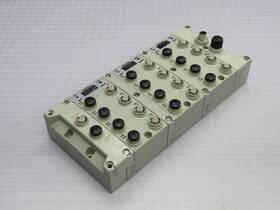
( Brand: Aventics ), ( Manufacturer Part Number: 240-206 ), ( Part Type: Manifold )
Review AVENTICS G3 Fieldbus Series Manifold Assembly
The **Aventics 240-206, 240-185, and 240-183 G3 Fieldbus Manifold (T268122)** represents a cutting-edge solution in industrial automation, designed to seamlessly integrate into modern control systems while delivering unparalleled precision, reliability, and flexibility for pneumatic applications. This high-performance manifold series is engineered under Aventics rigorous standards, combining robust construction with advanced Fieldbus communication technology to optimize efficiency in demanding environments. The **240-series** manifolds are specifically tailored for use with the **G3 Fieldbus** protocol, enabling real-time data exchange, diagnostics, and process monitoring, which are essential for enhancing productivity and reducing downtime in automated manufacturing, packaging, and material handling systems.
At the core of this manifold system lies a **modular and scalable design**, allowing operators to configure the **240-206 (with 6 ports), 240-185 (with 4 ports), and 240-183 (with 3 ports)** to match specific application requirements. Each unit is constructed from **high-grade aluminum**, ensuring durability against vibrations, temperature fluctuations, and corrosive conditions, while its compact footprint maximizes space utilization in tight control panels. The **G3 Fieldbus interface** integrates seamlessly with PLCs and other industrial controllers, providing bidirectional communication that enables dynamic control of pneumatic actuators, valves, and cylinders with minimal latency. This real-time feedback capability enhances process optimization by allowing for adaptive adjustments in response to changing operational conditions, thereby improving energy efficiency and reducing waste.
The **T268122** designation signifies a version optimized for **high-speed, high-precision applications**, where consistent performance is critical. The manifold s **integrated pressure regulation and flow control** features ensure stable operation across varying load demands, while its **sealed electrical connections** protect against dust, moisture, and electromagnetic interference, making it ideal for harsh industrial settings. Additionally, the **plug-and-play compatibility** with Aventics extensive range of pneumatic components such as directional control valves, pressure regulators, and sensors simplifies system integration and maintenance. Whether deployed in **automated assembly lines, robotic systems, or material transport applications**, these manifolds deliver the reliability and responsiveness required to maintain peak operational performance.
Beyond its technical capabilities, the **240-series G3 Fieldbus Manifold** embodies Aventics commitment to **sustainability and energy efficiency**. By enabling precise control over pneumatic systems, it minimizes energy consumption and extends the lifespan of connected equipment, reducing the environmental footprint of industrial operations. The **user-friendly configuration tools** and **comprehensive diagnostics** available through the Fieldbus interface further streamline troubleshooting, allowing technicians to quickly identify and resolve issues before they escalate. With its blend of **innovative communication technology, rugged engineering, and adaptable design**, the **240-206, 240-185, and 240-183 G3 Fieldbus Manifold (T268122)** stands as a cornerstone for next-generation pneumatic automation, empowering industries to achieve higher levels of efficiency, flexibility, and operational excellence.
### **Pros and Cons of buying a Aventics 240-206 / 240-185 / 240-183 G3 Fieldbus Manifold (T268122)**
#### **Pros**
1. **Compatibility with Profibus PA and Foundation Fieldbus**
- The G3 Fieldbus manifold supports both Profibus PA and Foundation Fieldbus (H1), making it versatile for industrial automation systems that require either or both protocols. This flexibility ensures long-term compatibility with existing or future field devices.
2. **High Reliability and Durability**
- Aventics is a well-established brand in industrial automation, known for robust and long-lasting components. The G3 manifold is designed for harsh environments, with features like reinforced housing, sealed connections, and resistance to vibration and temperature fluctuations. This reduces the risk of downtime and maintenance issues in demanding applications.
3. **Modular and Scalable Design**
- The manifold supports up to 16 field devices (depending on the specific model and configuration), allowing for easy expansion or reconfiguration of the system. This scalability is beneficial for growing operations or applications where device count may change over time.
4. **Integrated Diagnostics and Monitoring**
- The G3 Fieldbus manifold includes built-in diagnostics, such as device status monitoring, loop current measurement, and fault detection. These features help in proactive maintenance, reducing unplanned shutdowns and improving system reliability. Some models also support remote monitoring via the Fieldbus network.
5. **Compatibility with Aventics and Third-Party Devices**
- While primarily designed for Aventics sensors and actuators, the manifold can often interface with third-party devices that comply with the Profibus PA or Foundation Fieldbus standards. This broadens its applicability in mixed-vendor environments.
6. **Easy Installation and Integration**
- The manifold is designed for straightforward installation, with features like quick-connect terminals, pre-wired options, and compatibility with common mounting solutions. Integration with PLCs or DCS systems is simplified due to the standardized Fieldbus communication protocols.
7. **Support for Intrinsic Safety (Ex Approval)**
- The G3 manifold is certified for use in hazardous areas (e.g., Ex ia IIC T4 Gb for Profibus PA and Ex ia IIC T4 Gb for Foundation Fieldbus), making it suitable for applications in explosive environments such as chemical plants, oil and gas, or pharmaceutical facilities.
8. **Long-Term Availability and Support**
- Aventics is part of the Emerson portfolio, a global leader in industrial automation. This ensures continued support, spare parts availability, and software updates for the lifespan of the equipment, reducing the risk of obsolescence.
9. **Reduced Wiring Complexity**
- By consolidating multiple field devices into a single manifold, the system simplifies wiring and reduces cable clutter. This can lower installation costs and improve system organization.
10. **Energy Efficiency**
- Fieldbus communication reduces the need for separate power lines for each device, as power is supplied via the Fieldbus loop. This can lead to energy savings, especially in large systems with numerous devices.
---
#### **Cons**
1. **High Initial Cost**
- Fieldbus manifolds, especially those supporting both Profibus PA and Foundation Fieldbus, are more expensive upfront compared to simpler, non-Fieldbus solutions. The cost may be a barrier for smaller projects or budget-constrained applications.
2. **Complexity in Setup and Configuration**
- Configuring a Fieldbus network requires specialized knowledge of the protocols (Profibus PA or Foundation Fieldbus), device addressing, and network segmentation. This can lead to longer commissioning times and may require additional training for technicians.
3. **Dependence on Fieldbus Infrastructure**
- The manifold relies on a properly functioning Fieldbus network. Issues such as cable damage, network congestion, or protocol conflicts can disrupt communication with field devices. This introduces a single point of failure if the network is not robustly designed.
4. **Limited Support for Wireless or Modern Protocols**
- The G3 manifold is designed for wired Fieldbus communication. While it supports advanced diagnostics, it does not incorporate modern wireless technologies (e.g., Bluetooth, Wi-Fi, or 5G) or newer industrial protocols like Ethernet/IP or PROFINET. This may limit its use in future-proofing applications.
5. **Potential for Compatibility Issues with Older Systems**
- While the manifold supports both Profibus PA and Foundation Fieldbus, integrating it with legacy systems that use outdated Fieldbus versions or non-standard configurations may require additional adapters or workarounds.
6. **Maintenance and Troubleshooting Challenges**
- Diagnostics are built into the manifold, but complex Fieldbus networks can still be challenging to troubleshoot. Issues such as device failures, communication errors, or network topology problems may require specialized tools or expertise to resolve.
7. **Physical Size and Space Requirements**
- The manifold occupies more space than individual devices connected directly to a PLC or DCS. In applications with limited panel space or dense wiring, this may require creative mounting solutions or additional enclosure space.
8. **Vendor Lock-In Risks**
- While the manifold supports multiple devices, heavy reliance on Aventics-specific tools (e.g., configuration software) or proprietary features may create dependencies on the vendor. Switching to a different supplier later could involve additional costs or compatibility challenges.
9. **Limited Support for High-Speed Data Acquisition**
- Fieldbus networks are not designed for high-speed data acquisition or real-time control applications. For processes requiring millisecond-level response times, other communication protocols (e.g., Ethernet-based) may be more suitable.
10. **Deprecation of Foundation Fieldbus**
- Foundation Fieldbus is gradually being phased out in favor of newer protocols like PROFIBUS or Ethernet-based solutions. While the G3 manifold remains functional, long-term support for Foundation Fieldbus may diminish, potentially affecting future upgrades or replacements.
---
### **Conclusion**
The Aventics 240-206 / 240-185 / 240-183 G3 Fieldbus manifold is a robust, versatile, and reliable solution for industrial automation applications requiring Profibus PA or Foundation Fieldbus communication. Its strengths lie in its compatibility with multiple devices, built-in diagnostics, intrinsic safety certifications, and long-term support from a reputable manufacturer. These features make it ideal for large-scale or hazardous-area applications where reliability and scalability are critical.
However, the high initial cost, complexity of setup, and dependence on Fieldbus infrastructure are significant drawbacks. The manifold may not be the best choice for applications with limited budgets, high-speed data requirements, or those planning to adopt newer communication protocols in the future. Additionally, the need for specialized knowledge to configure and maintain the system could pose challenges for smaller teams or organizations without dedicated Fieldbus expertise.
### **Recommendation**
- **Buy the Aventics G3 Fieldbus manifold if:**- You are working in an environment where Profibus PA or Foundation Fieldbus is the standard or required (e.g., chemical processing, oil and gas, or pharmaceutical plants).
- Your application requires intrinsic safety (Ex certification) and a scalable, modular solution for multiple field devices.
- You prioritize long-term reliability, diagnostics, and support from a trusted vendor like Aventics.
- Your team has the expertise to configure and maintain Fieldbus networks, or you are willing to invest in training.
- **Consider alternatives if:**- Your budget is constrained, and you can opt for simpler, lower-cost solutions like direct PLC connections or non-Fieldbus manifolds.
- Your application requires high-speed data acquisition or real-time control, making Ethernet-based protocols (e.g., PROFINET, Ethernet/IP) more suitable.
- You are planning to transition to newer industrial communication standards in the near future, and Fieldbus may become obsolete.
- Your team lacks the expertise to handle Fieldbus configuration, and you prefer plug-and-play solutions with minimal setup complexity.
For most industrial applications where Fieldbus is already in use or required, the Aventics G3 manifold is a sound investment. However, carefully weigh the long-term costs, maintenance requirements, and compatibility with future system upgrades before purchasing.
Details:
We proudly sell hard-to-find parts, components, and machines to makers manufacturers. Glad you stopped by. These modules are designed to plug together using mechanical clips, allowing for flexible, tool-free assembly into a larger valve manifold system.
part #: 240206 prices
- $80.59-$278.07
specifications generapneumati:
- brand: Aventics
- mpn: 240-206
- part type: Manifold
returns generapneumati:
- paid by: Seller
- policy: Returns Accepted
- method: Money back
- time: 30 Days
seller generapneumati:
- city: El Paso, Texas
- # reviews: 21639
- rating: 99.7%
shipping generapneumati:
- cost: $13.17
- type: Calculated
- class: Standard, Expedited, One-day
- service: UPS Ground, UPS 2nd Day Air, UPS 3 Day Select, UPS Next Day Air
- carrier: UPS
- transit: 3-8 Days
payments generapneumati:
- other
- wallet: Google-pay
- credit card: Visa
offer generapneumati:
- options: Ship-to-home
- quantity: 1
- started: March 25, 2026
- availability: In Stock
- best offers: True
- sold: 0
general generapneumati:
- Business Industrial > Hydraulics, Pneumatics, Pumps Plumbing > Other Hydraulics Pneumatics
- condition: Used
Aventics 240-206 Is Similar To:
- Numatics R503a1b10ma00f1 503 Series Numatics aventics Sol-pilot Valve 310221 (33.3% similar) Manufacturer part number: R503A1B10MA00F1. voltage : 24 CDC. Valve FUNCTION:4 way 2 position 5/2 spring return. Pneumatic R503A1B10MA00F1...(September 24th, 2024)
- Aventics G503ams22ma0010 Pneumatic Manifold Block 319306 (41.2% similar) Port size: 1/4. Manufacturer part number: G503AMS22MA0010. Aventics G503AMS22MA0010. Number of stations...(April 21st, 2025)
- Numatics 0750d02-02a Numatics aventics Cylinder M Series 3 4 Inch New Sealed Plastic (28.2% similar) Pneumatic/aventics cylinder m series 3/4 bore 2 stroke, dbl acting 0750D02-02A new sealed plastic. All parts ordered before 3:30 pm est typically ship same day via ups, FedEx, or USPS...(April 29th, 2025)
- Aventics R480755415 R422102431 Pneumatic Block Manifold 8bar (45.4% similar) Buyers pay for return shipping. Aventics R480755415 - R422102431 pneumatic block manifold 8BAR: the is engineered for optimal performance in pneumatic systems, capable of handling pressures up to 8 bar. Return product, cash on pickup. Compact size: optimized for space-saving installations without ...(May 3rd, 2025)
- Aventics R422103560 5 2-directional Valve Series Ls04-af Used Surplus (39.2% similar) Please feel free to ask questions before purchase if you are unclear of a certain detail. This item is stock out of a surplus supply. Location: bin 379-2 RP. Show signs of storage -ware. If you do not see it in the pictures than most likely does come with item. Please see pictures carefully for ...(December 4th, 2025)
