METAL WORK PNEUMATIC 1620003 Hydraulics Pneumatics
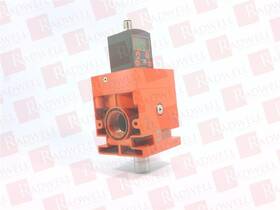
( Brand: Metal Work Pneumatic ), ( Manufacturer Part Number: 1620003 ), ( Part Type: Hydraulic Pneumatic )
Review METAL WORK PNEUMATIC Used
The **Pneumatic 1620003** is a high-performance, precision-engineered pneumatic actuator designed for demanding industrial applications where reliability, efficiency, and durability are paramount. This robust unit belongs to a series of advanced pneumatic cylinders that combine cutting-edge technology with rugged construction to deliver consistent and repeatable motion control in automated systems. Built with a **double-acting rod design**, the 1620003 ensures bidirectional force, allowing for both extension and retraction with minimal energy loss, making it ideal for applications requiring precise positioning, clamping, or material handling. Its **aluminum-alloy housing** provides an optimal balance of strength and weight reduction, while the **stainless steel rod** resists corrosion and wear, extending the actuator s operational lifespan even in harsh environments such as food processing, automotive assembly, or packaging industries.
The pneumatic cylinder features a **sealed piston rod** with advanced lip seals and wiper rings, preventing contamination from entering the cylinder while maintaining smooth operation. Its **integrated cushioning system** reduces impact forces at the end of strokes, minimizing wear on both the actuator and connected machinery, thereby enhancing longevity and operational stability. The 1620003 is equipped with **standard ISO mounting flanges**, ensuring compatibility with a wide range of industrial frames and fixtures, while its **adjustable stroke length** allows for customization to fit specific application requirements. Whether used in conveyor systems, robotic arms, or automated assembly lines, this actuator delivers **consistent force output** across its full range of motion, making it a versatile choice for manufacturers seeking precision and dependability in their pneumatic automation solutions.
For added convenience, the 1620003 incorporates **quick-connect fittings** for easy installation and maintenance, reducing downtime during servicing. Its **low-friction design** minimizes energy consumption, contributing to cost savings in compressed air usage, while the **high-pressure tolerance** ensures reliable performance even under fluctuating operational demands. Whether deployed in high-speed production environments or applications requiring fine control, this pneumatic actuator exemplifies engineering excellence, offering a seamless integration of performance, durability, and adaptability for modern industrial automation needs.
### **Pros and Cons of buying a Pneumatic 1620003**
The **Pneumatic 1620003** is a type of pneumatic actuator, commonly used in industrial automation, valve control, and machinery applications. Below is a detailed breakdown of its advantages and disadvantages.
---
### **Pros of the Pneumatic 1620003**
1. **High Reliability and Durability**
- Pneumatic systems are known for their robustness and ability to operate in harsh environments, including high temperatures, dust, and moisture.
- The 1620003 model is designed for long-term use with minimal maintenance, making it suitable for continuous industrial applications.
2. **Fast Response Time**
- Pneumatic actuators respond quickly to control signals, making them ideal for applications requiring rapid movement or precise timing.
- Unlike hydraulic systems, they do not suffer from fluid leakage or pressure drop issues that can slow response times.
3. **Energy Efficiency**
- Pneumatic systems are generally more energy-efficient than hydraulic systems because they use compressed air, which is readily available in many industrial settings.
- No need for complex cooling systems, reducing overall energy consumption.
4. **Safety and Clean Operation**
- Since they use compressed air instead of hydraulic fluid, there is no risk of fluid leaks contaminating the environment.
- Pneumatic systems are non-flammable, making them safer in environments with fire or explosion risks.
5. **Easy Installation and Maintenance**
- The 1620003 model is designed for straightforward installation, often requiring minimal wiring or plumbing compared to electric or hydraulic alternatives.
- Maintenance typically involves checking air filters, seals, and lubrication, which are relatively simple tasks.
6. **Versatility in Applications**
- Suitable for a wide range of industrial uses, including valve actuation, clamping, positioning, and material handling.
- Can be easily integrated with PLCs (Programmable Logic Controllers) for automated control.
7. **Low Operating Costs**
- Compressed air is often already available in factories, reducing additional infrastructure costs.
- Parts are widely available and relatively inexpensive compared to hydraulic or electric actuators.
---
### **Cons of the Pneumatic 1620003**
1. **Noise Generation**
- Pneumatic systems can produce significant noise due to the rapid expansion of compressed air, which may require soundproofing in sensitive environments.
- The 1620003 model may generate audible clicks or hissing sounds during operation.
2. **Limited Force Output at Low Pressures**
- While pneumatic actuators are strong, their force output is directly proportional to air pressure. At lower pressures, they may struggle to generate sufficient force for heavy-duty applications.
- Requires higher air pressure for demanding tasks, which may increase energy consumption.
3. **Dependence on Compressed Air Supply**
- The system relies on a stable and clean air supply. Poor-quality air (with moisture or contaminants) can damage seals and reduce efficiency.
- Requires an air compressor and filtration system, adding to initial setup costs.
4. **Slower Speed at Higher Loads**
- While pneumatic actuators are fast, their speed decreases under heavy loads due to increased resistance.
- The 1620003 may not be ideal for applications requiring constant high-speed operation under load.
5. **Potential for Air Leaks**
- Seals and connections can wear out over time, leading to air leaks that reduce efficiency and increase operating costs.
- Regular inspections are necessary to prevent performance degradation.
6. **Limited Precision in Positioning**
- Pneumatic systems are less precise than electric or hydraulic actuators for fine positioning tasks.
- May require additional feedback mechanisms (e.g., sensors) to achieve accurate control.
7. **Environmental Considerations**
- Compressed air systems contribute to energy consumption, especially if the air compressor is inefficient.
- In some cases, the energy used to compress air may offset some of the efficiency gains.
---
### **Conclusion**
The **Pneumatic 1620003** is a highly reliable and efficient actuator for many industrial applications, particularly where speed, safety, and simplicity are prioritized. Its strengths lie in its durability, quick response, and ease of maintenance, making it a popular choice for valve control, automation, and machinery applications. However, its limitations such as noise, dependence on air supply, and reduced precision may make it less suitable for applications requiring ultra-fine control or extreme quietness.
For environments where **reliability, speed, and low maintenance** are critical, the 1620003 is an excellent choice. However, if **precision, silent operation, or high-force output at low pressures** are required, alternative solutions like electric or hydraulic actuators may be more appropriate.
---
### **Recommendation**
**Buy the Pneumatic 1620003 if:**- You need a **fast, durable, and low-maintenance** actuator for industrial automation.
- Your application involves **valve control, clamping, or positioning** where pneumatic systems are already integrated.
- You operate in an environment where **safety and clean operation** are priorities (e.g., food processing, pharmaceuticals, or hazardous areas).
- Compressed air is **already available** in your facility, reducing additional infrastructure costs.
**Consider alternatives if:**- Your application requires **ultra-precise positioning** (electric servo actuators may be better).
- **Noise reduction** is critical (silent electric or hydraulic systems may be necessary).
- You need **high force at low pressures** (a larger pneumatic model or hydraulic actuator might be more suitable).
- Your setup lacks a **reliable compressed air supply** (electric actuators could be a simpler solution).
In most standard industrial applications where pneumatic systems are standard, the **Pneumatic 1620003 is a strong and cost-effective choice**. Ensure proper air filtration and maintenance to maximize its lifespan and efficiency.
Details:
Part Number 1620003. Sells new and surplus product develops channels to purchase such. Call to use a shipping service other than the ones listed. All products are guaranteed to be Working but may show signs of use if purchasing a used product.
Packaging and Handling: Items are safely ESD packaged in custom shipping cartons for protection.
part #: 1620003 price
- $464.00
specifications generapneumati:
- brand: Metal Work Pneumatic
- mpn: 1620003
- part type: Hydraulic Pneumatic
seller generapneumati:
- rating: 99.6%
- # reviews: 195229
- city: 1 Millennium Dr, Willingboro, NJ 08046
general generapneumati:
- Business Industrial > Hydraulics, Pneumatics, Pumps Plumbing > Other Hydraulics Pneumatics
- condition: Used
offer generapneumati:
- quantity: 1
- sold: 0
- availability: In Stock
- started: March 19, 2026
- options: Ship-to-home
returns generapneumati:
- method: Money back
- time: 30 Days
- paid by: Buyer
- policy: Returns Accepted
payments generapneumati:
- wallet: Google-pay
- other
- credit card: Discover
shipping generapneumati:
- type: Fixed
- class: Standard
- cost: $12.90
- transit: 30-35 Days
- service: Standard
Metal Work Pneumatic 1620003 Is Similar To:
- 1402003 Metal Works Work Standard (35.3% similar) Metal Work standard pressure regulator 0-12 bar g1 2 P/N threaded port: 1 inch max inlet pressure: 18 flow rate at 6 change in bar: 2500 Ni min fluid: filtered, lubricated or un lubricated compressed air. 8KG wall fixing screws: m4 x 55 mounting: in any position gauge port: g1 8 inch new surplus ...(October 18th, 2017)
- 3381001u Metal Work New Skillair 8024986232592 (39.5% similar) You are buying the Metal Work skill air 3381001U lib regulator Pneumatic not seen in pics. Item is brand new that we took out for pics of actual unit. Shipping in calculator...(August 13th, 2017)
- Knox030010299-7020021500 Metal Work Nsmp (32% similar) If another carrier such as DHL or ups is required to ship due certain shipping requirements, then the costs and requested may change...(March 24th, 2019)
- Metal Work Lub-300 Lub 300 Pneumatic Lubricator G3 4 Inch Bowl 3500ni min 13 Bar (43.5% similar) Bulk purchasing of surplus equipment and spare parts inventories. Complete robotic systems. Our services. Industrial parts r us is equipped to handle large machinery moving, crating, shipping, and trucking. Unless special packaging or shipping arrangements are requested. Let us sell your equipment. ...(September 7th, 2024)
- Metal Works 54a510881a00 Work Pneumatic (54.1% similar) Used, Metal Work Pneumatic 54A510881A G04...(September 7th, 2024)
- Metal Work Pneumatic W4015301000 Used (86.5% similar) All products are guaranteed to be Working but may show signs of use. Call to use a shipping service other than the ones listed. The product is used surplus. Packaging and handling: items are safely eds packaged in custom shipping cartons for protection. Part number sells new and surplus product ...(April 8th, 2025)
- Metal Work Pneumatic 3602003 Used (94.3% similar) Part number 3602003. The product is used surplus. Packaging and handling: items are safely eds packaged in custom shipping cartons for protection. All products are guaranteed to be Working but may show signs of use. Sells new and surplus product develops channels to purchase such. Call to use a ...(May 18th, 2025)
- Metal Work Pneumatic 5610r140 Used (87.3% similar) Packaging and handling: items are safely eds packaged in custom shipping cartons for protection. Part number 5610R140. All products are guaranteed to be Working but may show signs of use if purchasing a used product. Call to use a shipping service other than the ones listed. Sells new and surplus ...(September 11th, 2025)
- Metal Work Pneumatic 5610r120 Used (87.3% similar) All products are guaranteed to be Working but may show signs of use if purchasing a used product. Part number 5610R120. Packaging and handling: items are safely eds packaged in custom shipping cartons for protection. Sells new and surplus product develops channels to purchase such. Call to use a ...(September 11th, 2025)
- Metal Work 1120200025cp 020 Bore 0025 Stroke Pneumatic Air Cylinder Used (50.5% similar) Parts have some superficial scuffing or minor surface discoloration from shelf/ storage wear. Metal Work 020 BORE/0025 stroke Pneumatic air cylinder CAP used used: part may or not include box. Measuring devices shown in picture for scale only - they are not included with the listing. Free shipping. ...(February 14th, 2026)
