BANFLUXION 148123-OB Box Steel Pneumatic Pump Paste Feeding 0.4-0.6MPA
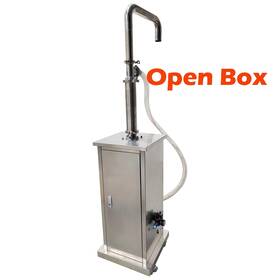
( Brand: Banfluxion ), ( Manufacturer Part Number: 148123-OB ), ( Type: Pneumatic Feeding Pump )
Review BANFLUXION Open Box Stainless Steel Pneumatic Pump Paste Liquid Feeding Machine
The **Banfluxion 148123-OB Box Steel Pneumatic Pump Paste Feeding System** is a high-performance, industrial-grade solution engineered for precise and efficient paste or slurry transfer in demanding manufacturing environments. Designed with robust **box steel construction**, this unit ensures exceptional durability and resistance to wear, making it ideal for continuous operation in factories, chemical processing plants, or food production facilities where reliability is paramount. The system operates on a **pneumatic principle**, leveraging compressed air to drive a powerful yet smooth feeding mechanism, eliminating the need for complex electrical components and reducing maintenance overhead. With an operating pressure range of **0.4 to 0.6 MPa**, it delivers consistent flow rates while maintaining optimal pressure control, ensuring uniform paste dispersion without clogging or inconsistencies. The compact yet sturdy design allows for easy integration into existing production lines, offering flexibility in installation whether mounted on walls, benches, or as part of a larger automated system. Built to handle a variety of viscous materials from adhesives and coatings to pharmaceutical pastes and food-grade slurries the Banfluxion system incorporates **sealed bearings and corrosion-resistant components**, extending its lifespan and minimizing downtime. Its **adjustable flow control** feature enables operators to fine-tune output based on specific application requirements, enhancing process efficiency and product quality. Whether used in small-scale batch processing or large-scale continuous production, this pneumatic pump stands out for its **low-energy consumption, quiet operation, and minimal maintenance demands**, making it a cost-effective investment for industries prioritizing precision and performance.
**Pros and Cons of buying a Banfluxion 148123-OB Box Steel Pneumatic Pump (Feeding 0.4 0.6 MPa)**
### **Pros**
1. **Durability and Build Quality**
The steel construction suggests a robust and long-lasting design, suitable for industrial or high-demand applications. Steel components are generally more resistant to wear, corrosion, and mechanical stress compared to plastic or lighter metals.
2. **Pneumatic Operation**
Pneumatic systems are often preferred in environments where electrical hazards are a concern (e.g., explosive atmospheres, wet conditions, or areas requiring intrinsic safety). They are also easier to maintain and repair than hydraulic systems, as they rely on compressed air rather than fluids.
3. **Pressure Range Suitability**
The 0.4 0.6 MPa (approximately 4 6 bar) pressure range is versatile for many applications, including material feeding, powder transfer, or light-duty pneumatic conveying systems. This range is common in industrial settings where moderate force is required without excessive energy consumption.
4. **Modular or Box Design**
The "box" design may imply ease of integration into existing systems or workflows. It could be mounted on conveyors, hoppers, or other machinery without significant modifications, reducing installation time and complexity.
5. **Potential for Automation**
Pneumatic pumps can be easily automated with solenoid valves or timers, making them suitable for repetitive or high-volume feeding tasks. This can improve efficiency in manufacturing or packaging processes.
6. **Low Maintenance Requirements**
Since pneumatic systems have fewer moving parts than hydraulic or electric alternatives (depending on design), they may require less frequent servicing. Seals and filters are the primary components that need attention, which can be relatively straightforward to replace.
7. **Compatibility with Various Materials**
Depending on the material of the internal components (e.g., stainless steel, rubber linings), this pump could handle abrasive powders, granules, or small pellets without clogging or rapid degradation.
8. **Energy Efficiency**
Pneumatic systems are generally more energy-efficient than hydraulic ones, as compressed air can be stored and reused in bursts. Electric alternatives may consume more power for continuous operation.
---
### **Cons**
1. **Dependence on Air Supply**
The pump s performance is entirely reliant on a stable and sufficiently pressurized air supply. Fluctuations in air pressure or contamination (e.g., moisture, oil) can lead to inconsistent operation or damage to the pump. This requires a dedicated compressor and air filtration system, adding to operational costs.
2. **Noise and Vibration**
Pneumatic pumps can generate significant noise and vibration during operation, which may be problematic in quiet work environments or where noise regulations apply. This could necessitate additional soundproofing or vibration-dampening measures.
3. **Limited Precision**
Compared to electric or hydraulic systems, pneumatic pumps may lack the fine control required for delicate or high-precision material handling. Variations in air pressure or leaks can affect the consistency of the feeding rate.
4. **Potential for Leaks**
Over time, seals and connections in pneumatic systems can wear out or develop leaks, leading to air loss and reduced efficiency. Regular inspections and maintenance are essential to prevent downtime.
5. **Higher Initial Cost of Air Infrastructure**
While the pump itself may be cost-effective, the need for a compressor, air dryers, and filtration systems can increase the total capital expenditure. Electric alternatives might have lower upfront costs if no additional infrastructure is required.
6. **Temperature Sensitivity**
Extreme temperatures can affect the performance of pneumatic components, such as seals or air lines. In cold environments, moisture in the air may condense and cause issues, while heat can accelerate wear.
7. **Space Requirements**
The box design may occupy more space than a compact electric or hydraulic alternative. Layout constraints in a facility could limit where the pump can be installed.
8. **Limited Customization**
Depending on the manufacturer, this pump may have fixed specifications (e.g., flow rate, pressure range) that do not easily adapt to unique or evolving process requirements. Custom modifications might require additional costs or third-party solutions.
9. **Environmental Considerations**
Compressed air systems are not energy-efficient compared to electric motors, especially if the compressor is not well-maintained or if excess air is vented. This could contribute to higher operational costs and a larger carbon footprint.
10. **Skill Dependency**
Troubleshooting pneumatic systems often requires specialized knowledge. Operators or maintenance personnel may need training to diagnose issues like leaks, pressure drops, or component failures accurately.
---
### **Ending Conclusion**
The **Banfluxion 148123-OB Box Steel Pneumatic Pump** is a practical choice for applications requiring **moderate pressure (0.4 0.6 MPa), durability, and pneumatic operation** in environments where electrical hazards or simplicity of maintenance are priorities. Its steel construction and modular design make it suitable for industrial settings with high-volume or repetitive feeding tasks, such as material handling, packaging, or light pneumatic conveying.
However, its **reliance on compressed air, potential for noise/vibration, and higher long-term costs associated with air infrastructure** may outweigh its advantages in settings where **precision, energy efficiency, or compactness** are critical. If the application aligns with its strengths such as in a factory with existing pneumatic systems or where safety against sparks is essential the pump can be a reliable and cost-effective solution. Conversely, if the process demands **high precision, low noise, or minimal space**, an electric or hydraulic alternative might be more appropriate.
---
### **Recommendation**
**Buy this pump if:**- You operate in an environment where **pneumatic systems are already in use** (e.g., existing compressed air network).
- Your application requires **moderate pressure (0.4 0.6 MPa) for feeding, conveying, or transferring materials** (e.g., powders, granules).
- **Durability and low maintenance** are priorities, and you can accommodate the **noise and space requirements**.
- **Electrical hazards** (e.g., explosive atmospheres) make electric alternatives unsafe or impractical.
- You have **budget flexibility** for the **compressor and air filtration systems** needed to support the pump.
**Consider alternatives if:**- You need **high precision or fine control** over material flow (e.g., pharmaceutical or food processing).
- **Energy efficiency** is a top priority, and you can justify the cost of an electric or hydraulic system.
- Your facility has **strict noise regulations**, and soundproofing would be costly.
- The application requires **very high or very low pressure ranges** outside the pump s 0.4 0.6 MPa capability.
- **Space is limited**, and a more compact system would be preferable.
**Final Suggestion:**Before purchasing, **verify compatibility with your existing air supply system** and **consult the manufacturer s specifications** for your specific material type and flow requirements. If possible, **test the pump in your environment** or request a demo to assess its performance under real-world conditions. Additionally, factor in the **total cost of ownership**, including air system maintenance and potential downtime, to ensure it aligns with your operational budget.
Details:
After use, clean the pipeline and machine thoroughly to prevent remaining materials from solidifying jamming. The universal wheel and the supporting leg are combined to effectively move support machine, greatly improving movement convenience stability. Product Display. Equipped with a machine box for more attractive appearance and easier cleaning.
The machine is made of thickened stainless steel materials, making it firm, durable and reliable ensuring excellent wear resistance, corrosion resistance long service life. Default Shipping Cost or Free Information. 2Open Box!Stainless Steel Pneumatic Pump Paste Liquid Feeding Machine 0.4-0.6MPA. Thanks very much.
The machine box is easy to open and close, can effectively protect the internal parts from damage collision, keeps clean, attractive orderly. Defective Damaged Products. Any costs incurred because of incorrect or un deliverable address should be undertaken by buyer. Operation Method, 1.
The machine is of a detachable structure, feeding parts are combined through stainless steel hoops, assembling and disassembling quick effortless, fixing firm reliable. The performance of oil seals is better than that the O-rings. Working mode Pneumatic. Do not allow people or objects to be located next the running parts of machine.
Do not touch the running parts during operation. Attention, Damage In Shipping. The pneumatic feeding machine is suitable for the industries of daily chemical, food, cosmetics, chemical and so on, can be used paste, sauce, grease, fruit juice, butter, etc.
It has high adaptability, hygiene and precise control, can substantially improve the automation level of production lines reduce manual intervention pollution risk. Hope for your understanding. Compatible with any equipment model's for feeding operation. Universal Wheel Assembly.
Do not put the hands into machine. The interior of the cylinder is sealed with oil seals which are resistant to corrosion, high temperature and wear. After use, clean the machine thoroughly and remove remaining materials. Place the material conveying pipe into tank to start feeding.
Product Features, There is no air compressor in the packing list. The PVC steel wire hose is adopted to convey different materials, has high flexibility and practicability, resistant wear, corrosion aging adapts various materials. Pure pneumatic design, reasonable structural safe and convenient.
High feeding speed, saving time and labor. Shipping Handling. The air pressure gauge can clearly display the in real time, facilitating observation and monitoring fulfilling early warning function. Assemble the machine and connect to air supply reliably.
specifications generapneumati:
- brand: Banfluxion
- mpn: 148123-ob
- type: Pneumatic Feeding Pump
returns generapneumati:
- time: 30 Days
- paid by: Buyer
- method: Money back
- policy: Returns Accepted
shipping generapneumati:
- type: Fixed
- cost: $0.00
- service: Flat Rate Freight
- class: Freight
offer generapneumati:
- options: Ship-to-home
- started: March 20, 2026
- quantity: 1
- availability: In Stock
- sold: 0
- best offers: True
general generapneumati:
- condition: Used
- Business Industrial > Hydraulics, Pneumatics, Pumps Plumbing > Other Hydraulics Pneumatics
payments generapneumati:
- credit card: Discover
- other
- wallet: Apple-pay
seller generapneumati:
- city: Tampa, Florida
- rating: 99.8%
- # reviews: 1083
