FLUX 104-S-S-2 Fmo Rotor Npt 104/S/S/2 Flow Meter 1-30 L/min 200BAR 1/2IN
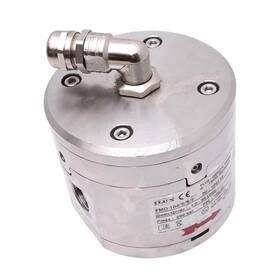
( Brand: Flux ), ( Manufacturer Part Number: 104/S/S/2 ), ( Type: Hydraulic )
Review FLUX 104/s/s/2 Fmo Oval Rotor Flow Meter 1-30 L/min 200bar Max 1/2in Npt
The **Flux 104/S/S/2 FMO Rotor Flow Meter** is a high-performance, compact, and versatile liquid flow measurement solution engineered for precision, durability, and ease of integration into demanding industrial applications. Designed with a robust **rotor-based measurement principle**, this flow meter delivers accurate and repeatable flow rate readings across a broad operational range, making it ideal for monitoring liquids such as water, oils, solvents, lubricants, and other low-viscosity to moderately viscous fluids. With a **flow range of 1 to 30 liters per minute (L/min)**, it excels in applications requiring fine-tuned control, such as hydraulic systems, cooling circuits, chemical processing, automotive testing, and laboratory environments where consistent fluid dynamics are critical. The meter s **maximum operating pressure of 200 bar (2900 psi)** ensures reliability in high-pressure environments, while its **1/2-inch NPT (National Pipe Thread) male connection** provides a secure and standardized interface for seamless integration into existing piping systems.
The **FMO (Flanged Male Output) version** of this rotor flow meter features a compact, modular design that simplifies installation and maintenance, reducing downtime and operational complexity. Its **S/S (stainless steel) construction** including both the rotor and housing enhances corrosion resistance, making it suitable for applications involving aggressive or corrosive fluids, while the **S/S/2 variant** likely denotes an additional level of reinforcement or a specific material upgrade for extended durability. The rotor s smooth, balanced movement ensures minimal pressure drop and energy loss, contributing to efficient system performance without compromising accuracy. With a **digital or analog output option** (depending on configuration), this flow meter can be easily interfaced with PLCs, data loggers, or control systems for real-time monitoring and automation, providing operators with actionable insights into fluid dynamics.
Beyond its technical specifications, the Flux 104/S/S/2 FMO stands out for its **low-maintenance design**, requiring minimal calibration and featuring a long service life even under continuous operation. Its **self-lubricating rotor** reduces wear, while the sealed construction prevents contamination from external elements, ensuring consistent performance over time. Whether deployed in a research laboratory, industrial manufacturing facility, or automotive test bench, this flow meter offers a reliable, cost-effective solution for applications where precision, durability, and ease of use are paramount. Its compact footprint and adaptable mounting options further enhance its versatility, making it a preferred choice for engineers and technicians seeking a dependable flow measurement tool in a wide range of fluid-handling scenarios.
### **Pros and Cons of the Flux 104/S/S/2 FMO Rotor Flow Meter (1 30 L/min, 200 bar, " NPT)**
#### **Pros:**1. **High Accuracy and Repeatability** Rotor flow meters like this one are known for precise measurements, especially for low to medium flow rates. The mechanical design minimizes turbulence-related errors, making them reliable for applications requiring consistent data.
2. **Wide Pressure Range (200 bar)** The ability to handle high-pressure applications (up to 200 bar) makes this meter suitable for industrial, hydraulic, or pneumatic systems where pressure fluctuations are common.
3. **Compact and Robust Construction** The " NPT connection is standard for many industrial setups, allowing easy integration into existing pipelines. The rotor design is typically durable, resistant to wear, and capable of handling abrasive or slightly contaminated fluids (depending on material).
4. **Low Maintenance** Since rotor flow meters have no moving parts beyond the rotor itself, they generally require less frequent calibration or replacement compared to electronic sensors. The FMO (Flow Meter Output) version likely includes a direct analog or digital signal output, reducing the need for additional signal conditioning.
5. **Cost-Effective for Medium Flow Rates** For flow ranges between 1 30 L/min, rotor meters offer a balance between cost and performance. They are often more affordable than ultrasonic or Coriolis meters while still providing reasonable accuracy.
6. **Compatibility with Various Fluids** Depending on the material (e.g., stainless steel, brass, or plastic), this meter can handle water, air, oil, or other clean fluids. Some models support backpressure compensation, improving accuracy in varying downstream conditions.
7. **Direct Readout Option** The FMO version suggests the possibility of a built-in display or analog output (e.g., 4 20 mA), making it easier to integrate with PLCs or data loggers without additional sensors.
---
#### **Cons:**1. **Limited Flow Range** The 1 30 L/min range is narrow for some applications. If flow rates outside this range are expected, a different meter (e.g., turbine or ultrasonic) may be more appropriate.
2. **Pressure Drop** Rotor flow meters introduce some pressure loss due to the internal design. In systems where minimizing pressure drop is critical, this could be a drawback.
3. **Sensitivity to Fluid Contaminants** While rotor meters can handle slightly dirty fluids, severe contamination (particulates, solids, or viscous fluids) can damage the rotor or bearings, reducing accuracy and lifespan. Filtration may be required upstream.
4. **Temperature Limitations** Most rotor meters have temperature limits (typically up to 120 C for standard models). If operating in extreme temperatures, a specialized version may be needed.
5. **Calibration Dependency** Like all mechanical flow meters, accuracy relies on proper initial calibration. Over time, wear or fluid-induced changes may require recalibration, adding maintenance overhead.
6. **Not Ideal for Highly Viscous Fluids** Rotor meters perform best with low-viscosity fluids (e.g., air, water, light oils). High-viscosity liquids (e.g., heavy oils, slurries) can cause sluggish rotor response or inaccurate readings.
7. **Signal Output Limitations** While the FMO version provides an output, it may not be as versatile as digital or pulse-based meters for advanced data processing or remote monitoring.
8. **Potential for Wear Over Time** The rotor and bearings are subject to wear, especially in abrasive environments. This can lead to drift in accuracy and may require periodic replacement.
---
### **Ending Conclusion:**The **Flux 104/S/S/2 FMO rotor flow meter** is a solid choice for applications requiring **accurate, low-to-medium flow measurement (1 30 L/min) at high pressures (200 bar)** with minimal maintenance. It excels in **clean or slightly contaminated fluids** where a balance of cost, durability, and precision is needed. However, it is **not ideal for highly viscous, abrasive, or extremely high-flow applications**, nor does it offer the flexibility of digital or ultrasonic meters for advanced monitoring.
### **Recommendation:** - **Buy this meter if:**- Your application involves **air, water, or light oils** within the 1 30 L/min range.
- You need a **durable, low-maintenance solution** for high-pressure systems (e.g., hydraulic testing, pneumatic control, or lab applications).
- You require a **direct analog output (FMO)** for simple integration with data loggers or basic control systems.
- Budget constraints make it a preferable alternative to more expensive technologies.
- **Consider alternatives if:**- Your flow rates **frequently exceed 30 L/min** or drop below 1 L/min (a turbine or ultrasonic meter may be better).
- The fluid is **highly viscous, abrasive, or contains significant particulates** (a positive displacement or mass flow meter might be more suitable).
- You need **high-resolution digital output, wireless connectivity, or advanced diagnostics** (Coriolis or ultrasonic meters would be superior).
- The application involves **extreme temperatures or corrosive fluids** (specialized materials or designs may be required).
For most **industrial, laboratory, or process control applications** where the specified range and conditions align, this meter is a **reliable and cost-effective option**. However, always verify compatibility with your exact fluid type, pressure conditions, and long-term maintenance plans before purchasing.
Details:
Viscosity: 1-500,000 maps. Specifications: model #: FMO 104/S/S/2. For FLUXTRONIC System. Max Pressure: 200 bar 2900psi.
Flow Rate: 1-30 L/min. This is a surplus item.
part #: 104ss2 price
- $920.00
specifications generapneumati:
- brand: Flux
- mpn: 104/s/s/2
- type: Hydraulic
general generapneumati:
- condition: Used
- Business Industrial > Hydraulics, Pneumatics, Pumps Plumbing > Other Hydraulics Pneumatics
payments generapneumati:
- other
- wallet: Google-pay
- credit card: Discover
seller generapneumati:
- # reviews: 45382
- city: Osseo, Minnesota
- rating: 100.0%
offer generapneumati:
- sold: 0
- best offers: True
- quantity: 2
- started: April 27, 2026
- availability: In Stock
- options: Ship-to-home
returns generapneumati:
- time: 30 Days
- policy: Returns Accepted
- paid by: Buyer
- method: Money back
shipping generapneumati:
- class: Standard, Expedited, One-day
- transit: 3-5 Days
- cost: $0.00
- type: Calculated
- service: UPS Ground, UPS 2nd Day Air, UPS Next Day Air
- carrier: UPS
